About this image
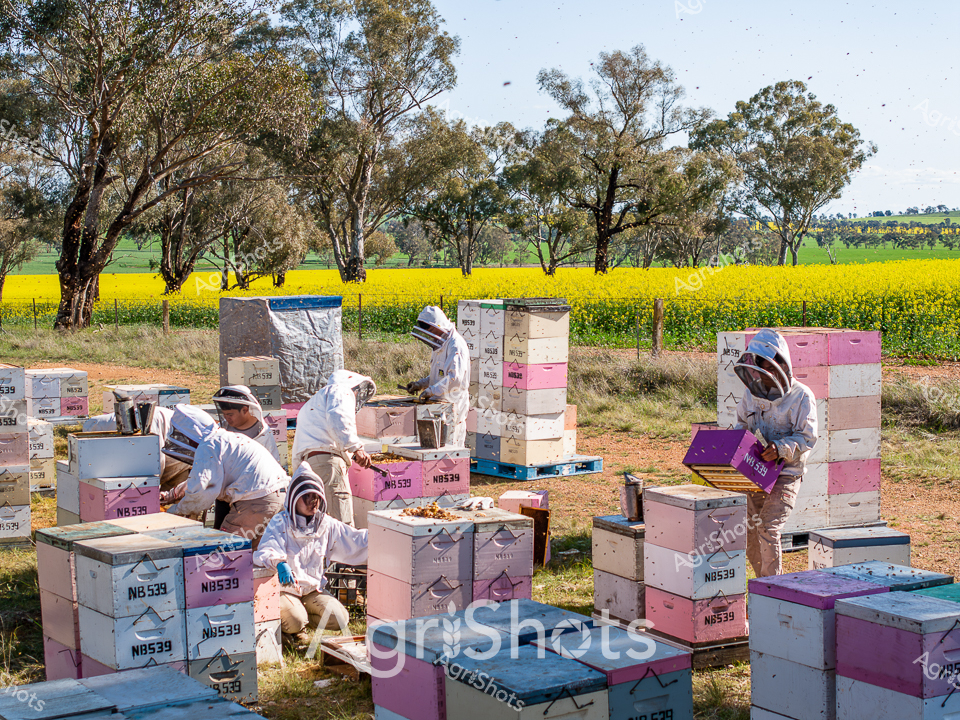
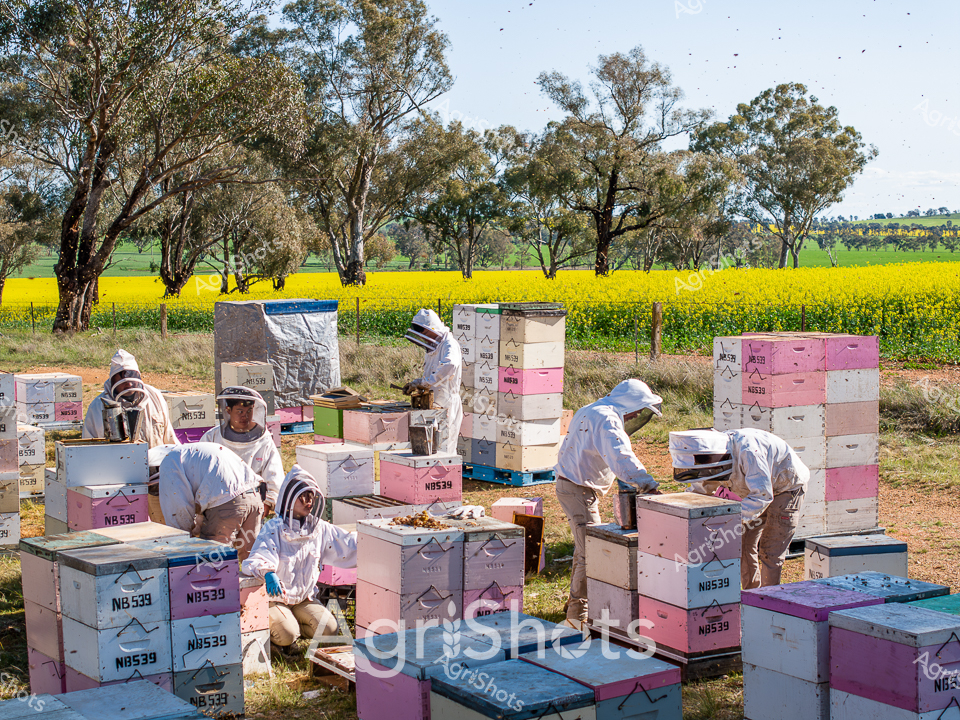
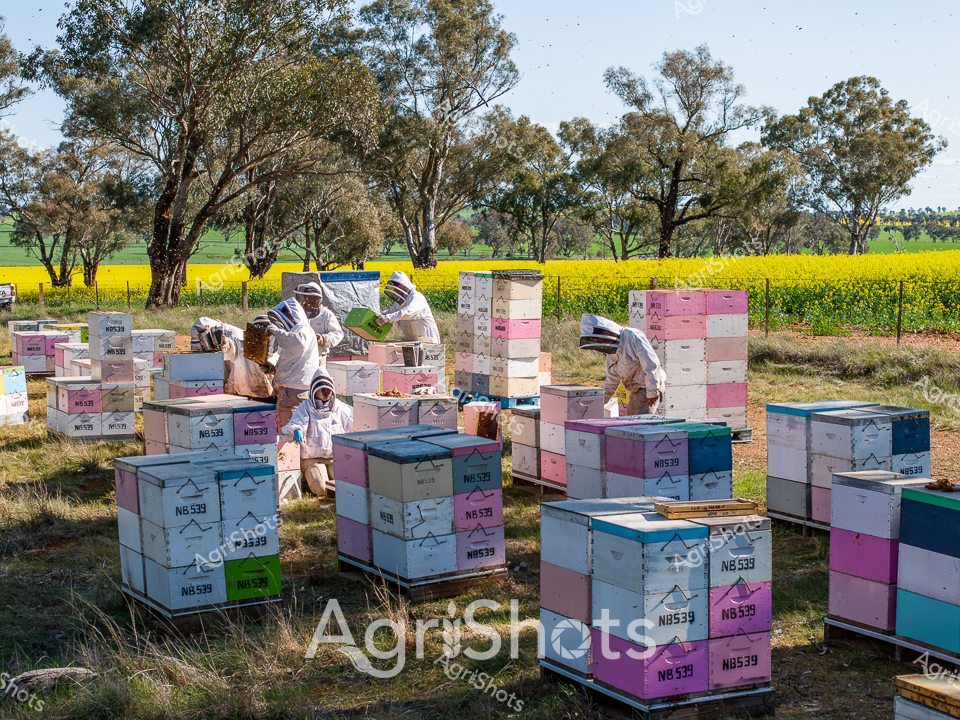
Beekeepers tend to a vibrant apiary nestled between mature eucalyptus trees and a brilliant golden canola field in full spring bloom. Clad in protective white suits and veiled helmets, the workers carefully manage a collection of pastel-hued hive boxes marked with identifying codes NB539, methodically moving and inspecting the wooden structures. The soft pink, blue, and white hives contrast beautifully against the rich red earth and the luminous yellow canola field stretching to the horizon, creating a quintessential Australian agricultural landscape. Bees drift lazily between the hive boxes, their critical pollination work supporting the surrounding agricultural ecosystem. The scene captures the intricate relationship between agricultural workers, managed bee colonies, and the broader landscape of the New South Wales Riverina region during the productive spring season. Sunlight filters through the gum trees, highlighting the meticulous care and sophisticated management required in modern agricultural practices.
Similar media
 Image
Image
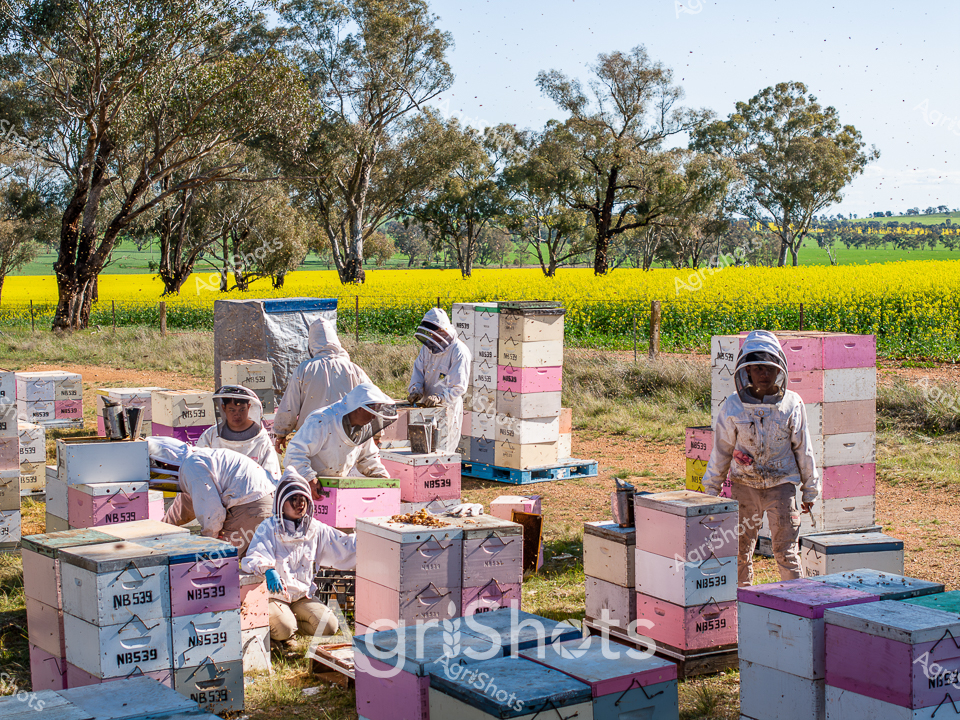
Beekeepers tend to a sprawling apiary nestled between towering eucalyptus trees and a vibrant canola field in full golden bloom. Dressed in protective white suits and mesh veils, the workers carefully manage rows of pink, blue, and white hive boxes marked with identification numbers NB539. The soft spring sunlight filters through the landscape, illuminating the delicate balance between agricultural cultivation and natural pollination. Meticulously arranged hives sit on the rich earth, with the brilliant yellow canola field creating a stunning backdrop that stretches toward the distant tree line. These dedicated apiarists move deliberately among the stacked hives, performing intricate tasks of hive management and honey production - a critical part of Australia's agricultural ecosystem. The scene captures the harmony of agricultural practice, where human intervention and natural processes collaborate to support crop production and sustainable farming in the picturesque Riverina region of New South Wales.
 Image
Image
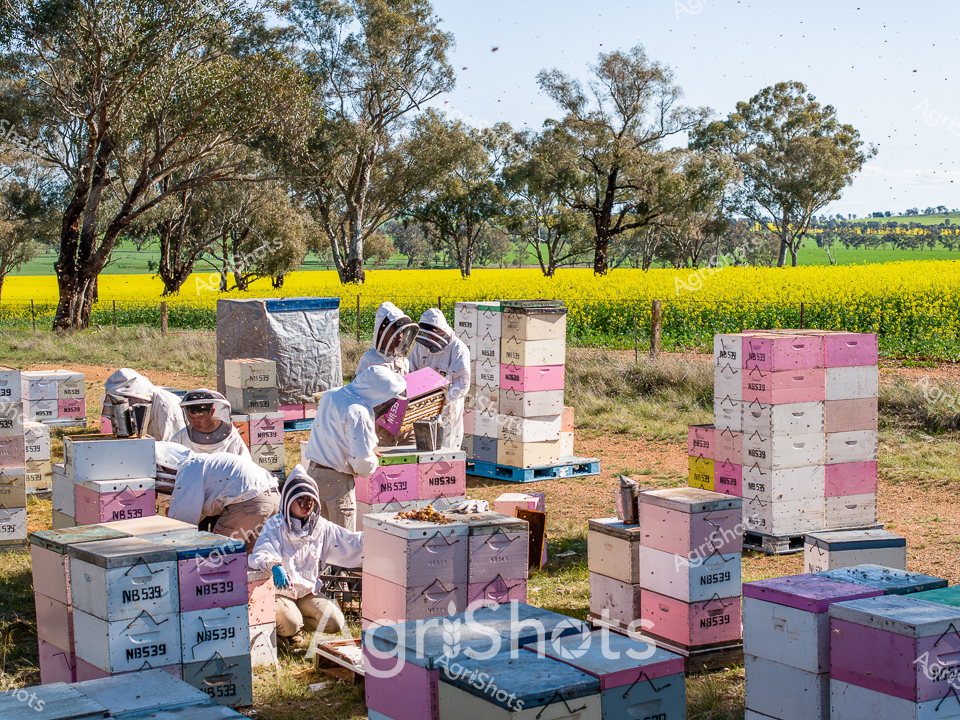
Amidst the golden expanse of a flowering canola field, skilled apiarists tend to their meticulously organized bee hives in the lush Riverina region of New South Wales. Dressed in protective white suits and veiled helmets, the beekeepers carefully manage stacks of pastel pink and blue hive boxes, each labeled with distinct identification numbers. The vibrant yellow canola crop stretches to the horizon, creating a stunning contrast with the silvery-green eucalyptus trees scattered across the landscape, capturing the quintessential Australian agricultural scenery of early spring. Bees swarm subtly around the hive boxes as the workers methodically inspect and manage the colonies, an essential process for pollination and honey production. The numbered hive boxes - predominantly in soft pink and white - are strategically positioned on the rich earth between the trees and the brilliant crop field, revealing the precision and planning inherent in modern agricultural practices. This scene epitomizes the delicate symbiosis between agricultural cultivation, environmental stewardship, and the critical role of pollinators in Australia's agricultural ecosystem.
 Image
Image
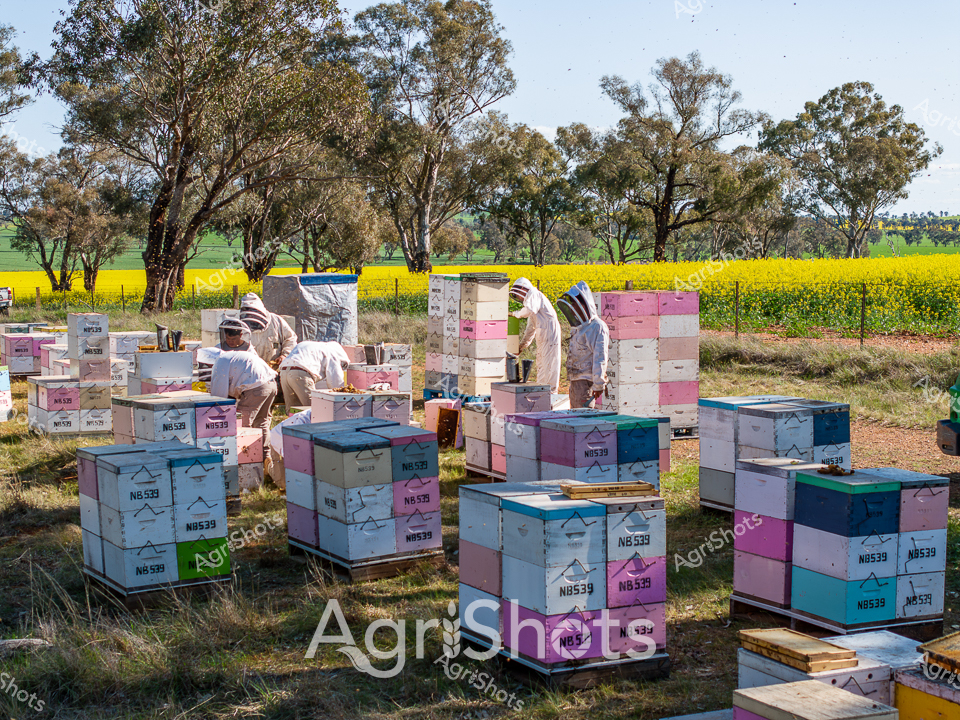
Vibrant yellow canola fields burst into bloom against a backdrop of weathered eucalyptus trees, creating a quintessential Australian agricultural landscape. Carefully arranged stacks of multicolored bee hives - in shades of pink, blue, white, and green - populate the grassy foreground, with dedicated apiarists in protective white suits meticulously working among the hives. The numbered boxes (NB539) suggest a professional, organized approach to beekeeping, strategically positioned to maximize pollination of the surrounding canola crop. Soft spring light filters through the scattered trees, highlighting the delicate relationship between agricultural production and natural ecological systems. Skilled beekeepers move deliberately between the hives, their protective gear a stark contrast to the soft natural palette of the landscape, embodying the precision and care fundamental to successful agricultural practices. This scene captures the intricate dance of agricultural symbiosis - where managed bee colonies play a critical role in crop production, showcasing the Riverina region's sophisticated approach to farming and environmental stewardship.
 Image
Image
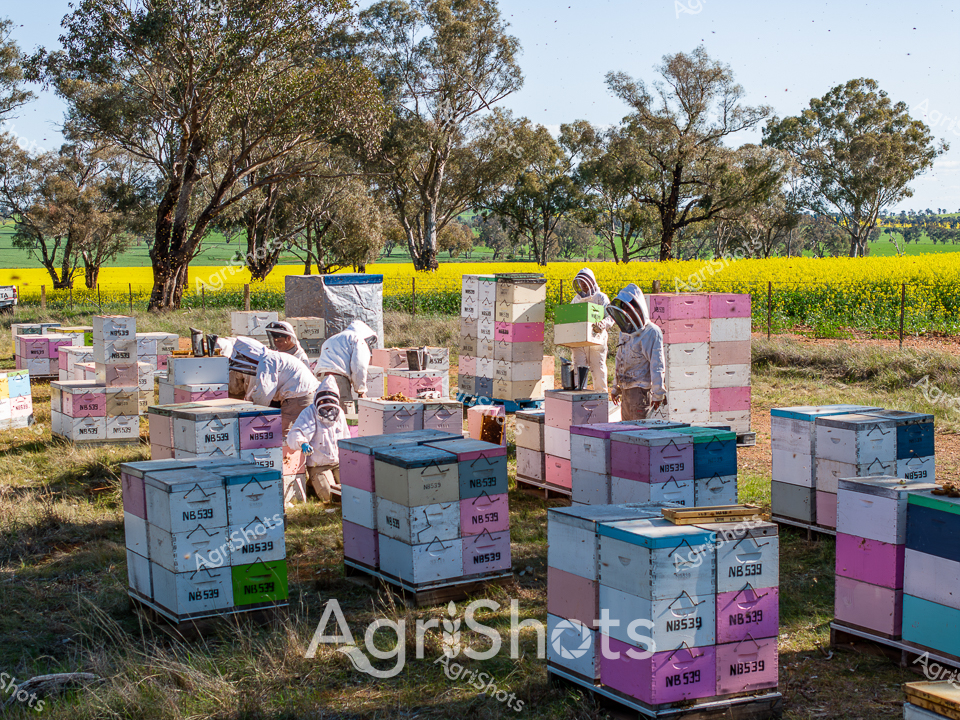
Nestled among silver-leafed gum trees and a brilliant golden canola field, a dedicated team of apiarists meticulously tends to their bustling bee colonies. Dressed in protective white suits and mesh veils, the workers carefully manage rows of pastel pink and blue-gray hive boxes, each marked with identification codes like NB539. The vibrant spring landscape of New South Wales's Riverina region provides a stunning backdrop, with the saturated yellow canola crop contrasting against the soft greens and grays of the surrounding woodland. Experienced beekeepers move deliberately between the stacked hives, performing intricate tasks of hive management and honey production. Their careful movements and clustered arrangement suggest a well-coordinated operation, with each worker focused on maintaining the health and productivity of these critical pollinators. The scene captures the essential symbiosis between agriculture and apiculture, where bees play a crucial role in crop fertility and ecosystem health. The crisp, clear light and expansive rural setting evoke a sense of pastoral harmony, highlighting the precision and care required in modern agricultural practices. This image celebrates the unsung heroes of agricultural productivity - the humble honeybee and the skilled professionals who nurture them.
 Image
Image
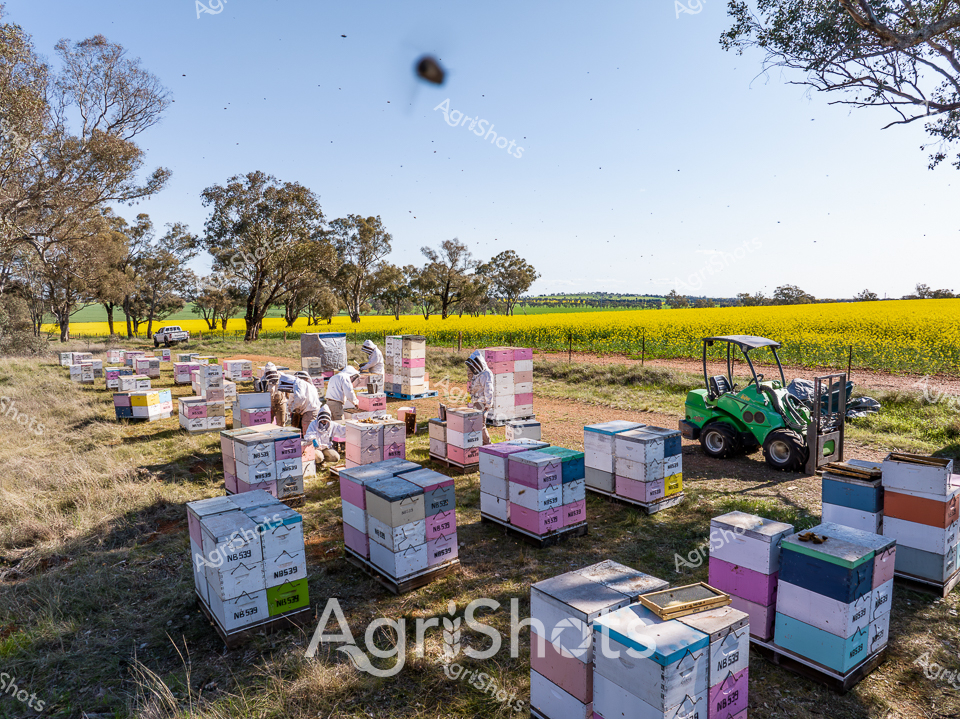
Vibrant yellow canola fields burst into bloom across the Riverina landscape, creating a stunning backdrop for a busy apiary operation. Stacked bee hives in a palette of pastel pinks, blues, and whites stand clustered beneath gnarled eucalyptus trees, with numbered labels identifying each hive colony. Beekeepers in protective white suits carefully tend to the hives, their movements deliberate and measured as they manage the crucial pollination process. The soft spring light filters through the trees, highlighting the intricate dance of bees moving between the colorful hive boxes and the brilliant golden canola field. This scene captures the delicate symbiosis of agricultural practice and natural ecosystem, where careful bee management supports crop production in the rich agricultural heartland of New South Wales. The ordered rows of hives, the wild beauty of the surrounding landscape, and the methodical work of the beekeepers tell a story of precision, care, and the essential role of pollinators in Australian agriculture.
 Image
Image
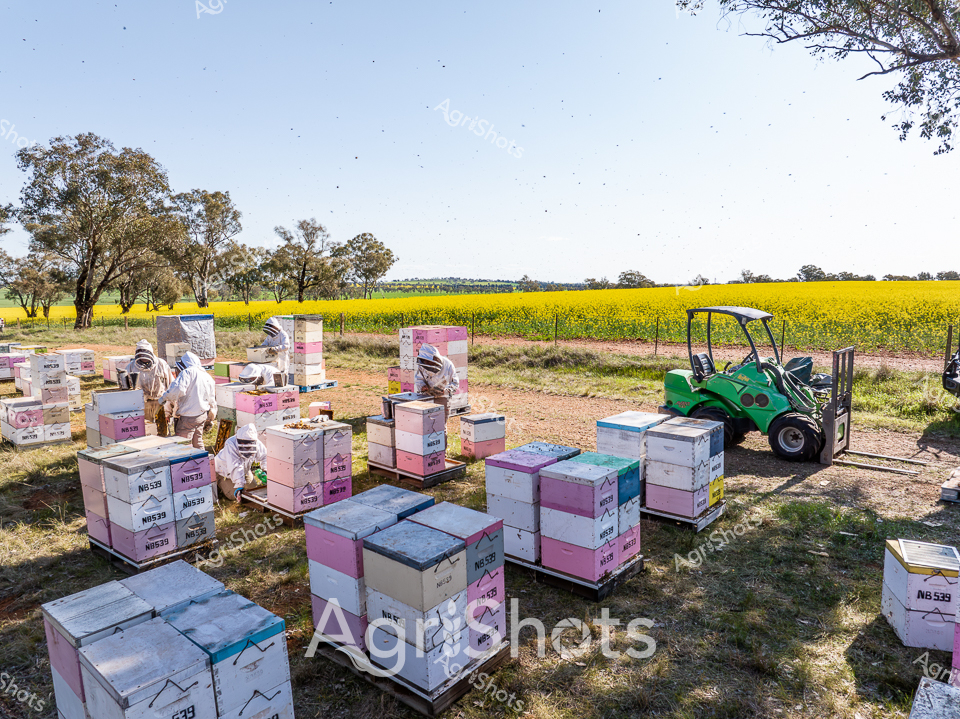
Golden canola fields burst with vibrant yellow against a backdrop of gnarled eucalyptus trees, creating a quintessential Australian agricultural landscape in the Riverina region of New South Wales. Stacked in neat rows, dozens of pastel-colored bee hives sit nestled in the grassy foreground, with two beekeepers in full protective white suits carefully managing their delicate charges. A robust green agricultural utility vehicle stands ready nearby, highlighting the professional and methodical approach to apiary management during the spring pollination season. Bees swirl subtly in the air, their critical role in agricultural ecosystems evident as they traverse between the hives and the brilliant canola crop. The crisp, clear sky and soft early morning light suggest the careful timing of bee management - a precision agricultural practice that supports both crop production and honey cultivation. This scene captures the intricate symbiosis between agricultural workers, their specialized equipment, and the essential pollinators that help drive Australia's agricultural productivity.
 Image
Image
Beekeepers tend to a vibrant apiary nestled between golden canola fields and scattered gum trees in the heart of New South Wales' Riverina region during spring. Stacked in neat rows, pink, blue, and white bee boxes create a colorful mosaic against the dusty ground, while a green agricultural utility vehicle stands ready nearby. Fully suited in protective white beekeeping gear, workers carefully manage the hives, ensuring the crucial pollination process that will help transform the brilliant yellow canola crop surrounding them. The brilliant landscape captures the essence of agricultural symbiosis - honeybees working in harmony with farmers to support crop production under the expansive Australian sky. Sunlight bathes the scene, highlighting the intricate relationship between insects, farmland, and human agricultural practices. This image represents the delicate yet robust ecosystem of rural Australian agriculture, where careful management and natural processes intersect to produce food and sustain the landscape.
 Image
Image
Beekeepers tend to a vibrant apiary nestled among eucalyptus trees and golden canola fields in the Riverina region of New South Wales. Clad in protective white suits, the workers carefully manage a colorful array of hive boxes in soft pastel shades of pink, blue, and white, meticulously labeled with identification numbers. The spring landscape bursts with life, the bright yellow canola crop providing a stunning backdrop to the carefully arranged bee boxes scattered across the grassy paddock. Soft light filters through the gum trees, highlighting the intricate work of these essential agricultural workers who are critical to crop pollination and honey production. Each numbered hive represents a carefully managed colony, with the beekeepers moving methodically between the stacks, checking on the health and productivity of their buzzing charges. The scene captures the delicate balance of agricultural science, environmental stewardship, and the critical symbiosis between bees and farmers in the Australian rural landscape.