About this image
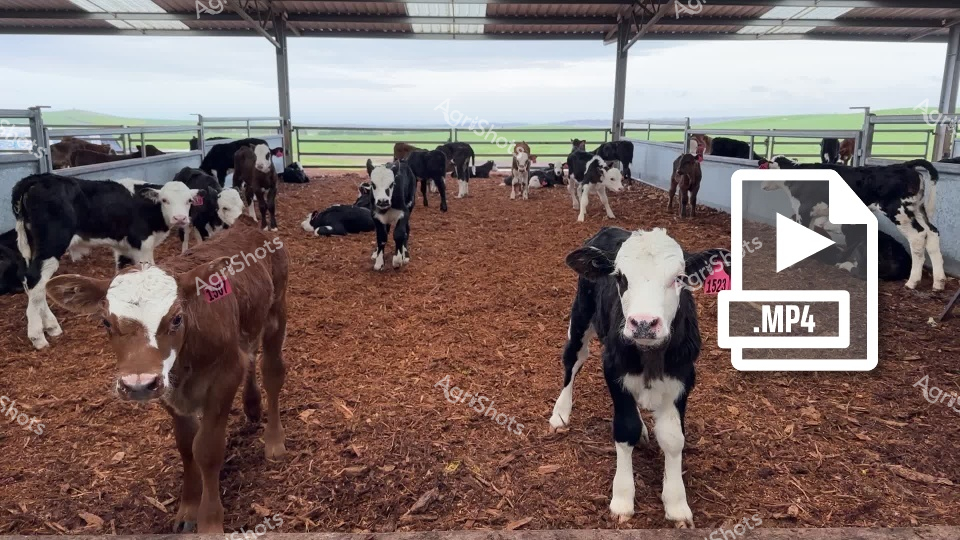
Young dairy calves huddle together in a covered pen with a wood chip bedding floor, showcasing a typical Tasmanian winter scene on a dairy farm. These bobby calves are grouped together, waiting to be fed, with various black, white, and brown colored calves visible in the enclosed space that provides shelter from the cold weather.
Similar media
 ▶ Video
Young dairy calves gather in a sheltered indoor pen during the crisp Tasmanian winter, their black and white coats creating a patchwork against the rich reddish-brown wood chip bedding. Ranging from weeks to a few months old, these Holstein and Friesian crossbred calves represent the future of a productive dairy operation, standing or resting in small groups under a translucent-roofed shelter that allows soft, diffused winter light to illuminate their space. Some calves stand alert, ears perked and curious, while others rest quietly, demonstrating the calm environment of modern agricultural calf-rearing facilities. The spacious, clean pen with its sturdy metal barriers and wood chip substrate shows contemporary best practices in livestock management, ensuring these young animals have protection from harsh winter conditions while maintaining optimal health and growth potential. Each calf bears a distinctive ear tag, a small but important marker of individual tracking and management in a sophisticated dairy breeding program. The scene captures the quiet promise of agricultural renewal - these young animals representing the next generation of Tasmania's vital dairy industry.
 ▶ Video
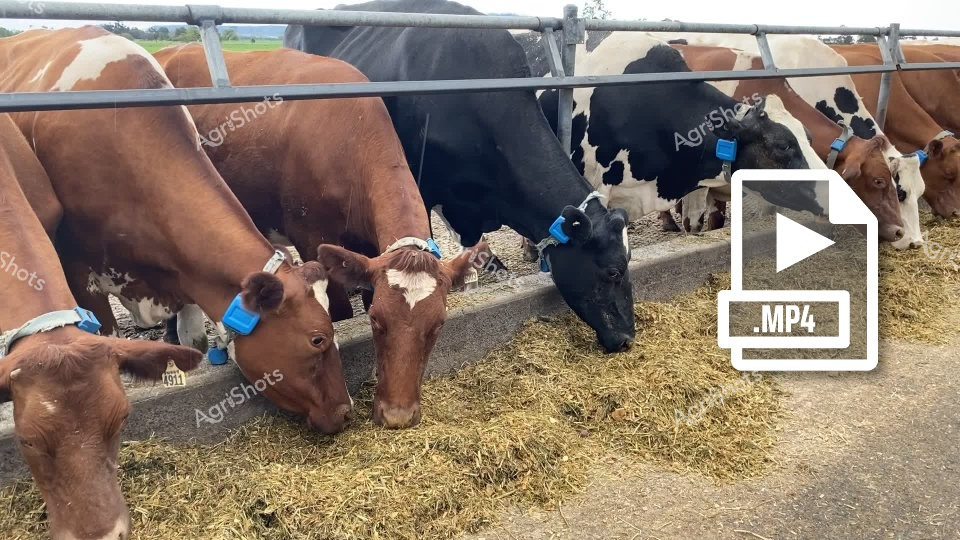
A herd of Holstein and brown dairy cows stand together in a metal-railed pen, eating hay on a straw-covered floor. These cattle, typical of New South Wales dairy farms, wear blue identification tags and represent a mix of black and white and brown cow breeds. The image captures the daily life of a working dairy farm, showcasing the animals' close proximity and communal feeding behavior.
 ▶ Video
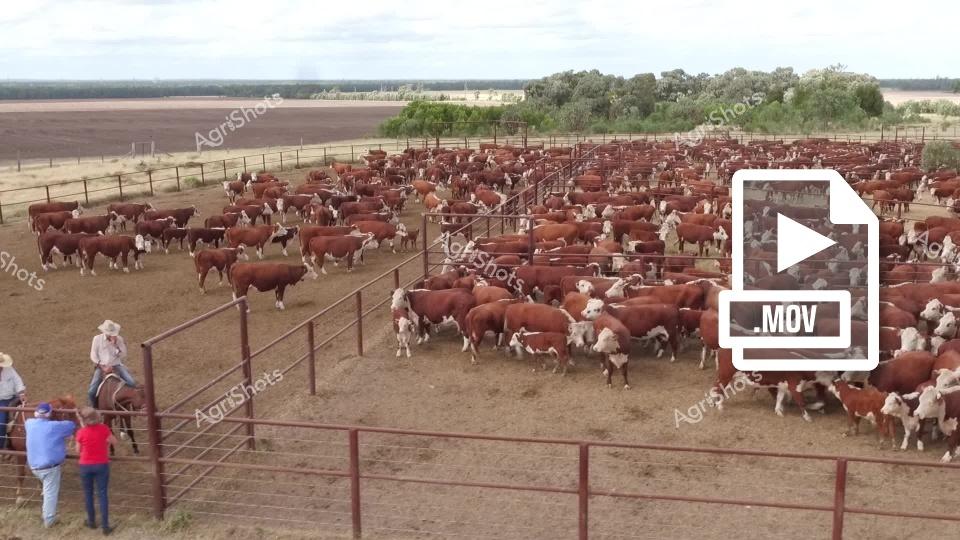
Hundreds of Hereford cattle with distinctive red coats and white faces fill the dusty cattle yards at this Queensland station, creating a sea of livestock awaiting processing. Two men stockmen on horseback work methodically through the yards, expertly mustering the beef cattle while spectators observe from the fence line. The extensive yards stretch across the rural landscape of the Queensland, with trees dotting the horizon beyond the organized chaos of cattle movement. This classic Australian cattle station scene captures the essence of beef production, where skilled horsemen and working dogs collaborate to handle large numbers of cattle in the traditional mustering process.
 ▶ Video
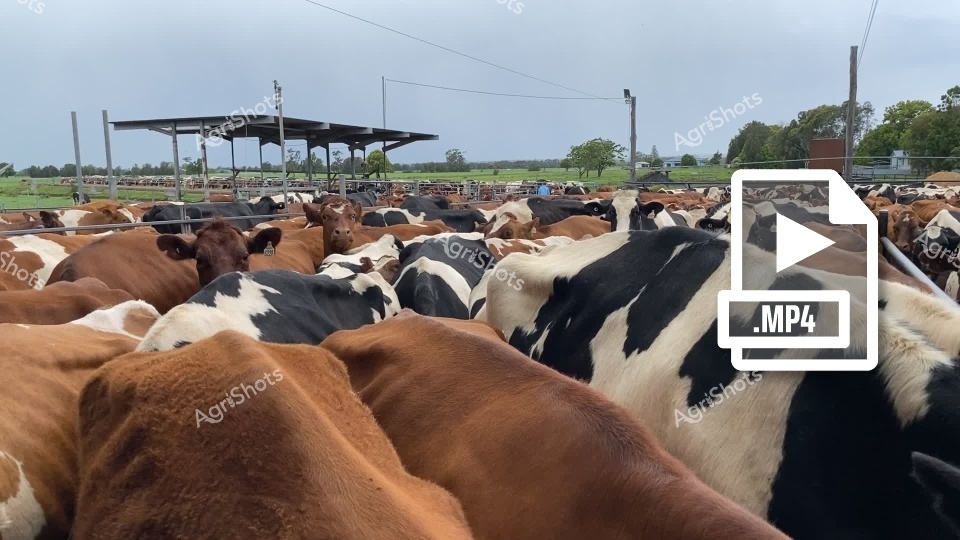
Packed tightly in a dusty cattle yards, a dense herd of dairy cattle clusters beneath a steel sheltered area, showcasing the rich diversity of Australian bovine breeds. Striking Holstein Friesians with their iconic black and white patches intermingle with warm chestnut-brown cattle, creating a living tapestry of agricultural productivity. Overhead power lines and rural infrastructure frame the scene, suggesting a typical dairy farming landscape in coastal New South Wales. The cattle stand shoulder-to-shoulder, their muscular bodies reflecting generations of careful breeding and agricultural expertise, highlighting the economic backbone of regional farming communities. Soft grey-blue skies and distant green treelines offer a tranquil backdrop to this intense scene of livestock management, capturing the precise moment where animal husbandry meets industrial-scale food production. The raw, unfiltered MP4 video tag suggests an authentic, unedited glimpse into the daily rhythms of Australian dairy farming.
 ▶ Video
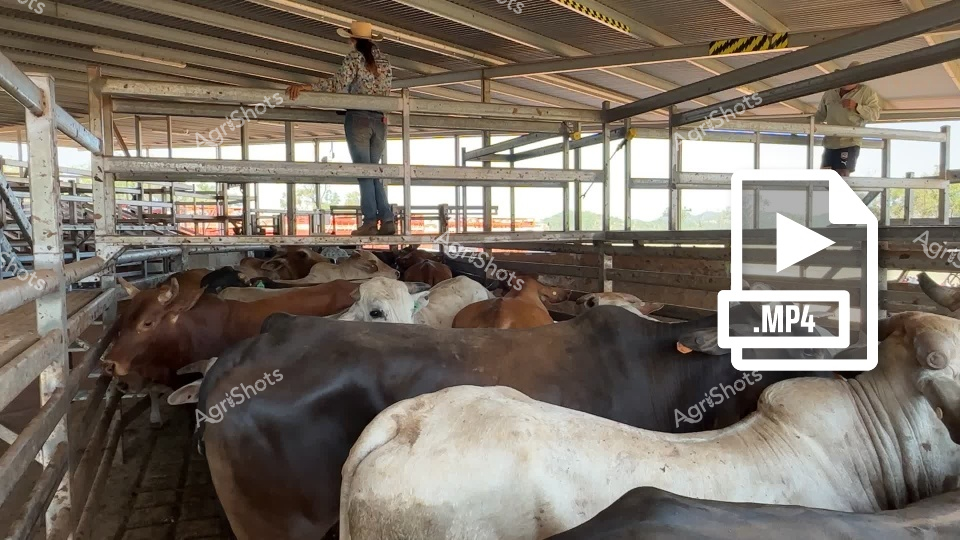
A group of Brahman cattle are clustered tightly together in a multi-level cattle yard with metal fencing and structural supports. The cattle display varied coat colors including white, brown, and dark grey, typical of the Brahman breed with its distinctive muscular build and loose skin. This appears to be a live export facility in the Northern Territory, specifically in the Adelaide River region, where cattle are prepared for transport via road train.
 ▶ Video
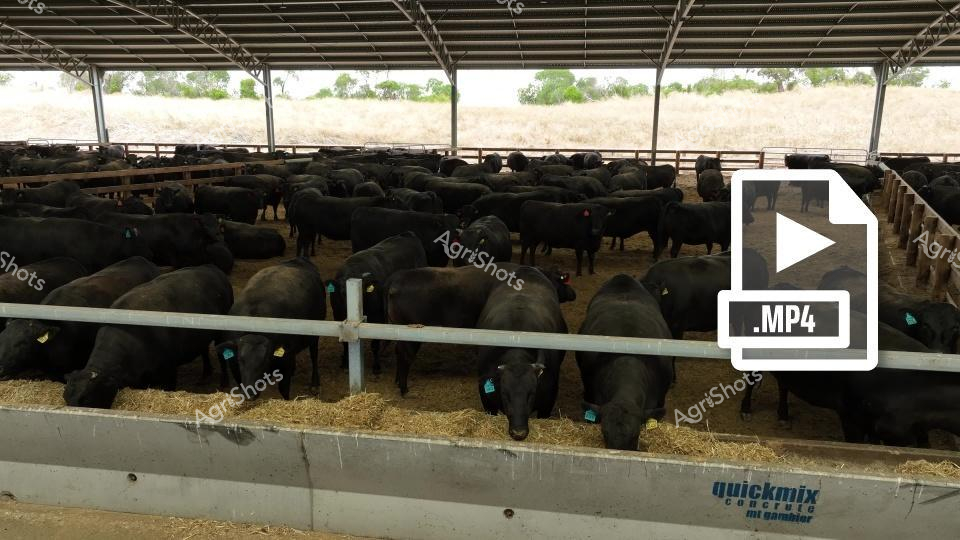
Black Wagyu cattle densely populate a covered feedlot, standing on a bed of golden straw beneath a steel-framed shelter. The sleek, muscular animals are uniformly dark, with small teal identification tags marking each individual. Stout metal railings divide the pen, creating a structured environment designed for efficient livestock management. Soft natural light filters through the open sides of the structure, casting subtle shadows across the packed earthen floor and highlighting the cattle's glossy black coats. In the background, a sparse pastoral landscape with scattered vegetation suggests this is a South Australian agricultural setting, typical of the region's robust cattle production industry. The scene captures the precise, calculated approach of modern beef production - a carefully controlled environment where each animal represents a significant agricultural investment.
 ▶ Video
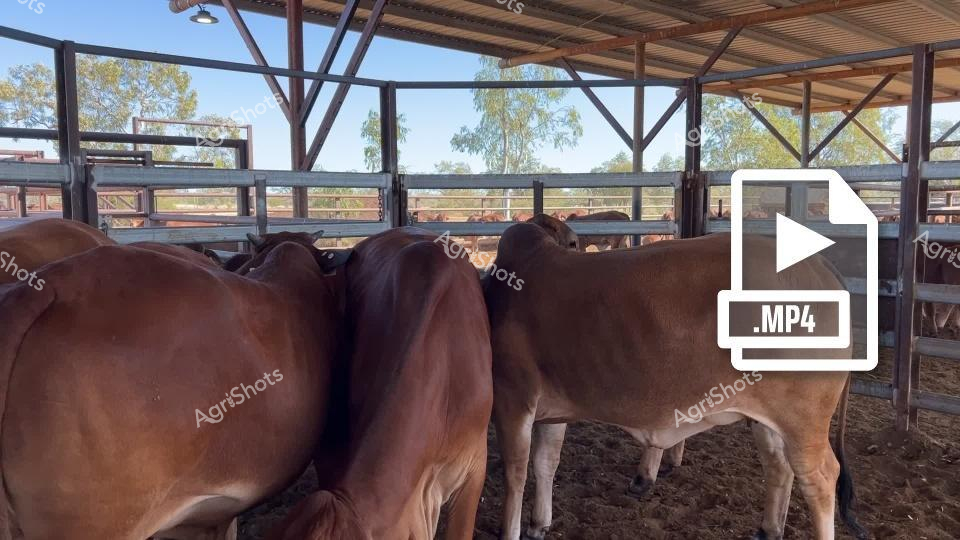
Brahman cattle stand in a metal-framed yard under a corrugated roof, showcasing the typical robust build of this heat-tolerant breed. The reddish-brown cattle are clustered together in a Queensland agricultural setting, highlighting the importance of livestock in the region's farming practices. The open-sided structure and surrounding trees suggest this is a typical cattle management setup in rural Australia.
 ▶ Video
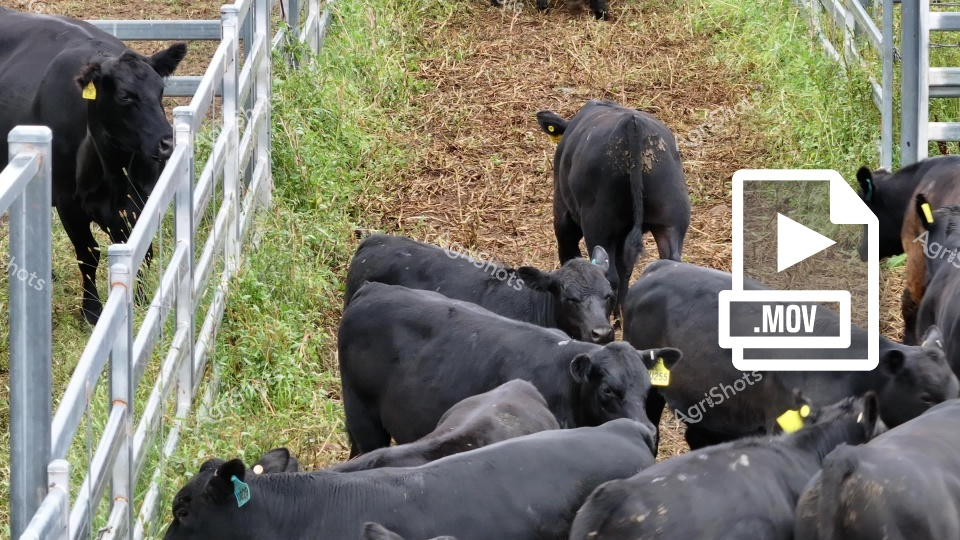
Black Angus cattle cluster in a timber-railed yard, their sleek midnight-black coats contrasting against sun-dappled straw and green pasture grass. Yellow ear tags punctuate their dark silhouettes, identifying each animal within this carefully managed stud herd. The tight grouping suggests a precise moment of agricultural management - likely drafting or preparing for movement between paddocks in the New England region of New South Wales. Summer heat softens the background, creating a golden-green landscape that speaks to the rich pastoral traditions of Australian cattle breeding. These robust Angus represent generations of careful genetic selection, their muscular frames and calm demeanor reflecting low-stress handling techniques critical to modern livestock management. The metal gates and carefully maintained yard demonstrate the sophisticated infrastructure supporting Australia's world-class beef production systems.