About this image
A dense cluster of honeybees covers the honeycomb within a wooden hive, showcasing the intricate social structure of these industrious insects. The bees move purposefully across the hexagonal wax cells, some filled with golden honey, representing a thriving colony during a cool Tasmanian winter season. Their striped bodies and translucent wings create a mesmerizing pattern of movement and cooperation.
Similar media
 ▶ Video
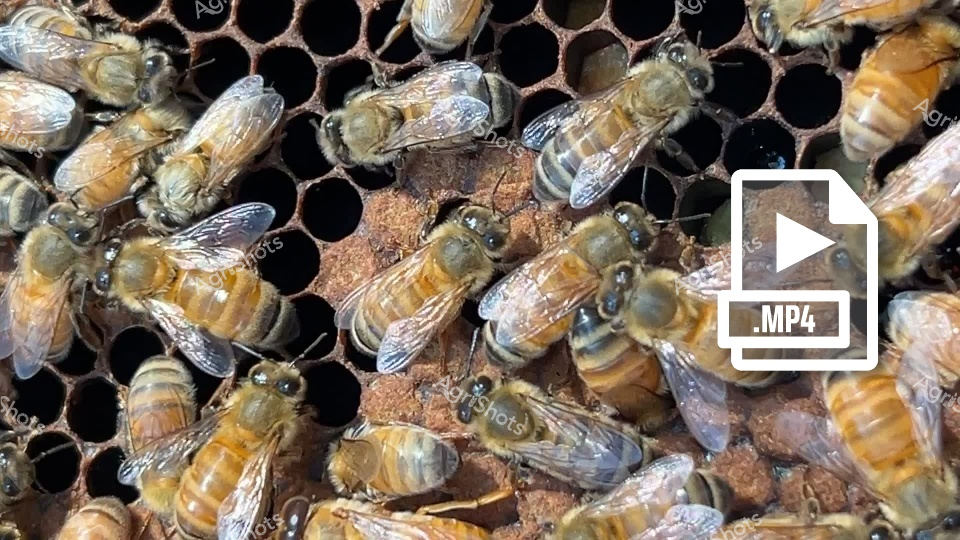
A dense cluster of honeybees covers a honeycomb, showcasing the intricate social structure of a vibrant bee colony. The bees, with their golden-brown bodies and translucent wings, move purposefully across the hexagonal wax cells, representing the bustling life of an active hive in the Lockyer Valley region of Queensland during springtime.
 ▶ Video
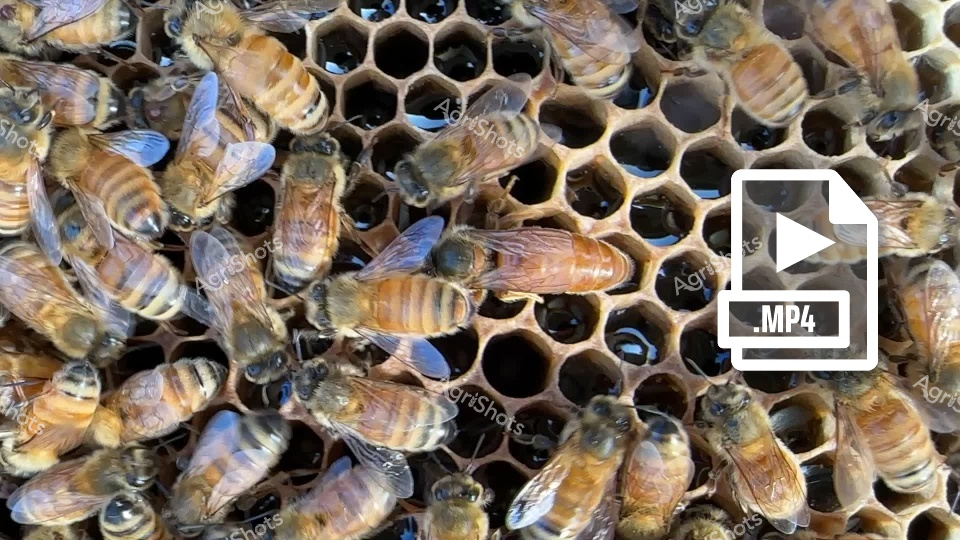
In this close-up image of a honeycomb, numerous honey bees cluster together across the hexagonal wax cells. The bees display varying golden-brown and amber tones, with some darker and some lighter in coloration. The intricate detail reveals the complex social structure of these industrious insects as they move and work within their hive structure.
 ▶ Video
A dense cluster of honey bees covers a golden honeycomb, showcasing the intricate social structure and cooperative nature of these essential pollinators. The bees appear to be working together, moving across the hexagonal wax cells in a bustling, organized manner typical of a healthy hive during the spring season in Queensland's Lockyer Valley Region.
 Image
Image
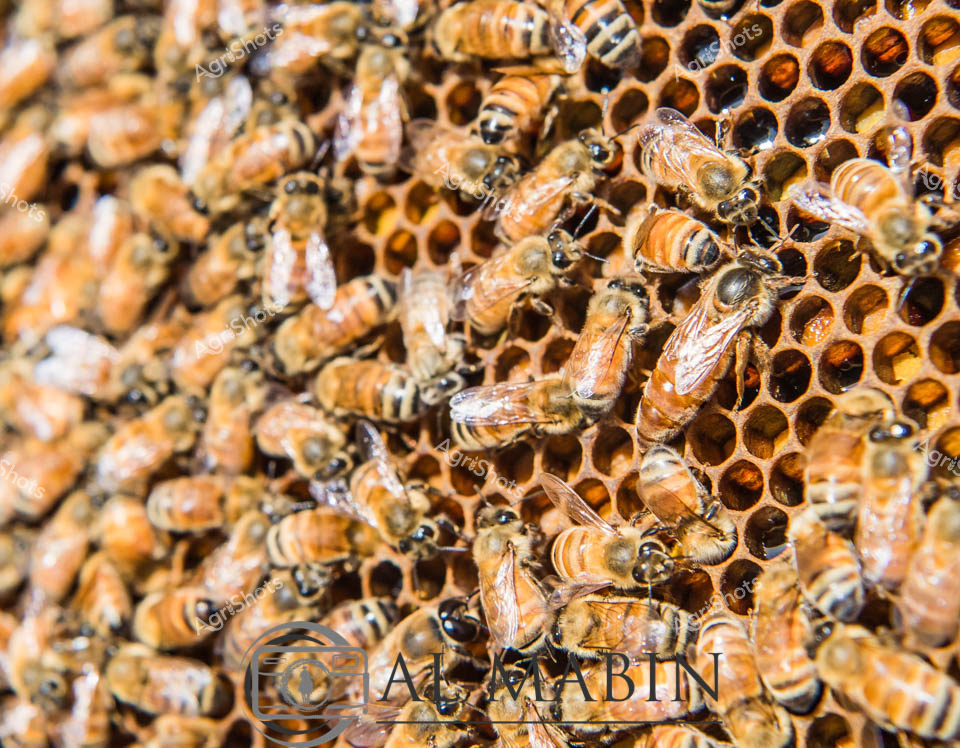
A bustling honeybee colony thrives on their hexagonal honeycomb structure in this detailed apiary scene from Tasmania's Upper Mersey Valley Region. Worker bees with distinctive striped abdomens move purposefully across the wax cells, some filled with golden honey while others contain developing brood, capturing the essential pollination activities of spring. The intricate geometric patterns of the hive reveal the remarkable engineering skills of these industrious insects as they tend to their colony's needs. This intimate view showcases the vital role of bee hives in agricultural ecosystems, where these pollinators support crop production and honey harvesting throughout the Tasmanian countryside.
 ▶ Video
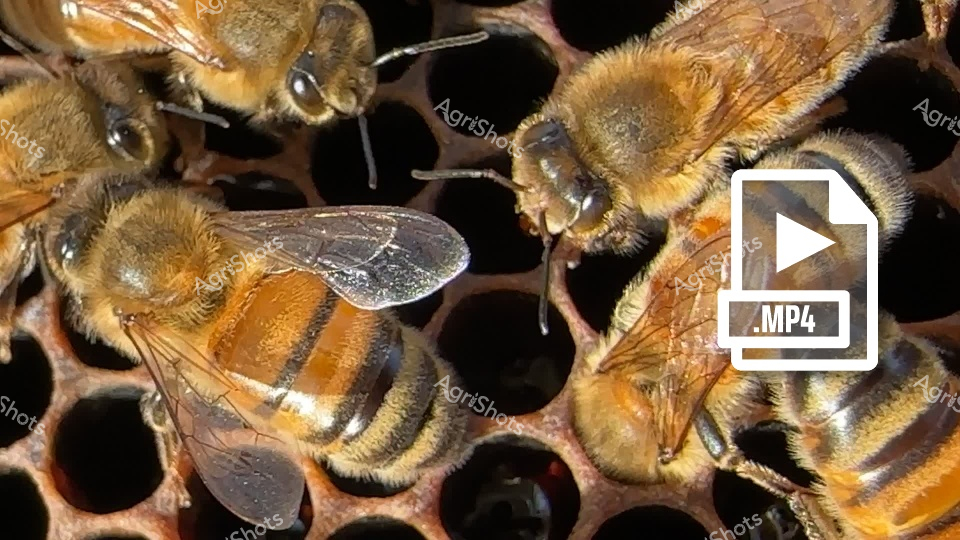
This close-up image reveals a cluster of honeybees working within their intricate honeycomb. The bees display rich golden-brown coloration, with translucent wings and fuzzy bodies, positioned across the hexagonal wax cells. Their detailed textures and collective activity showcase the fascinating social structure and collaborative nature of bee colonies.
 Image
Image
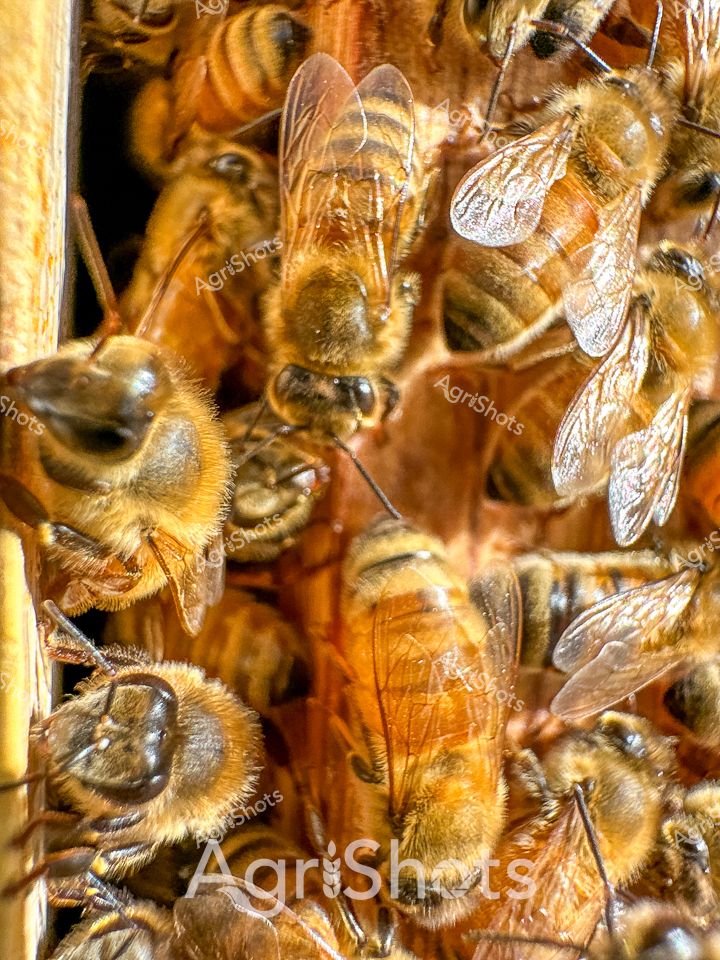
Liquid gold pulses with life in this mesmerizing close-up of a honey bee colony. Densely clustered worker bees blanket the honeycomb, their amber-gold bodies gleaming with fine golden-brown fur and translucent wings catching the soft light. Each bee is meticulously positioned, a living tapestry of collective survival and intricate social organization typical of Tasmanian apiary operations during the cooler winter months. The rich golden-orange tones speak to the warmth generated within the hive, a crucial survival mechanism when external temperatures drop. Delicate antennae and compound eyes reveal the complex sensory world of these remarkable pollinators, highlighting the sophisticated biological engineering that underpins agricultural ecosystems. This remarkable image captures the extraordinary micro-universe of bee society - a testament to the precision, cooperation, and vital ecological role of these remarkable insects in Tasmania's agricultural landscape.
 Image
Image
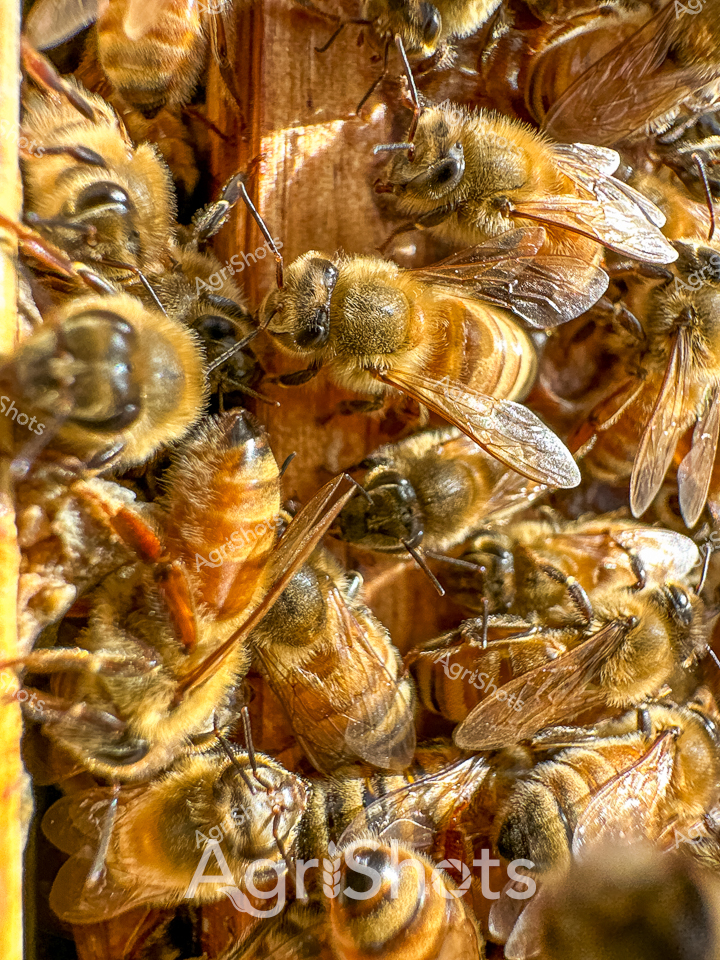
Honeybees cluster densely across a wooden hive frame, their golden-amber bodies creating a living tapestry of intricate movement and collective purpose. Each bee's delicate translucent wings and fuzzy thorax gleams in warm sunlight, revealing extraordinary textural details of their chitinous exoskeletons. The tight formation demonstrates the remarkable social behavior of these crucial pollinators, packed closely together in what appears to be a cool Tasmanian winter environment. Subtle variations of amber, bronze, and honey-brown tones create a rich visual landscape, highlighting the bees' remarkable adaptation and communal survival strategies. Every individual insect seems precisely positioned, yet the overall scene pulses with subtle organic energy - a microcosm of agricultural symbiosis central to Tasmania's robust agricultural ecosystem. The wooden hive frame provides a structured backdrop, emphasizing the systematic yet wildly complex nature of apiary management in southern Australian agricultural practices.
 Image
Image
A close-up view of a bustling bee hive reveals hundreds of honey bees clustered densely across the hexagonal honeycomb structure in Tasmania's Upper Mersey Valley Region. A beekeeper's finger gently points into the frame, demonstrating hands-on apiary management during the active spring pollination season. The golden-brown bees move purposefully across their wax cells, some with heads deep in the comb tending to brood or honey stores, while others patrol the surface in the organized chaos typical of a thriving hive. This intimate perspective captures the intricate world of bee hives and the vital role these industrious insects play in agricultural pollination throughout the Tasmanian landscape.