About this image
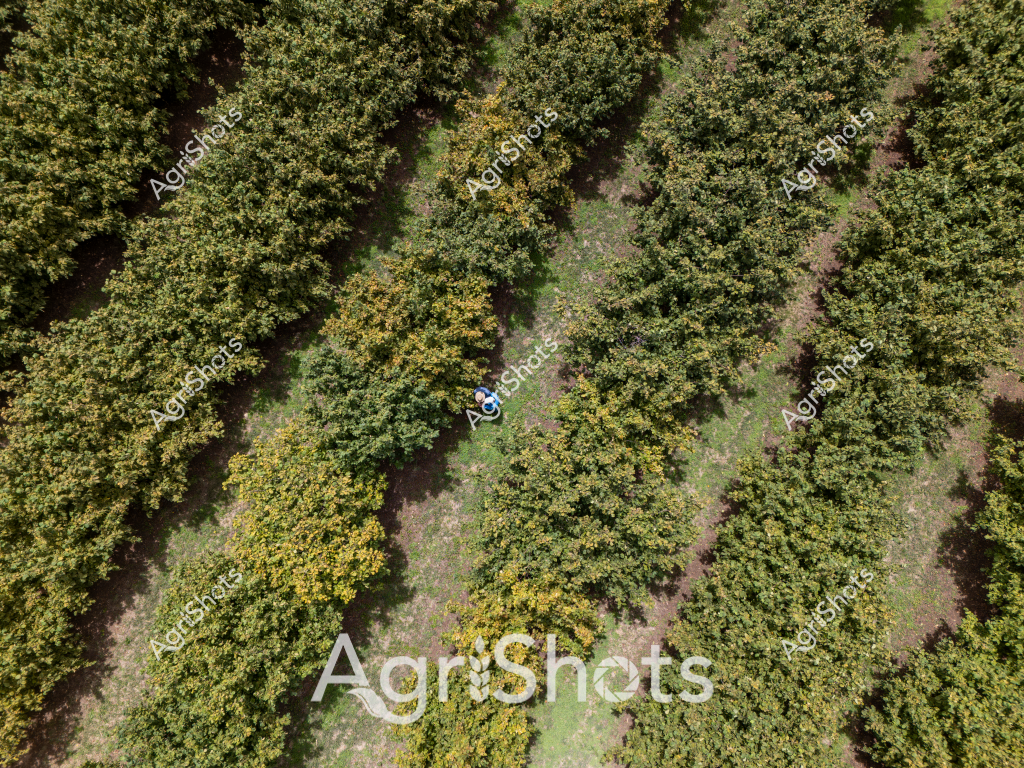
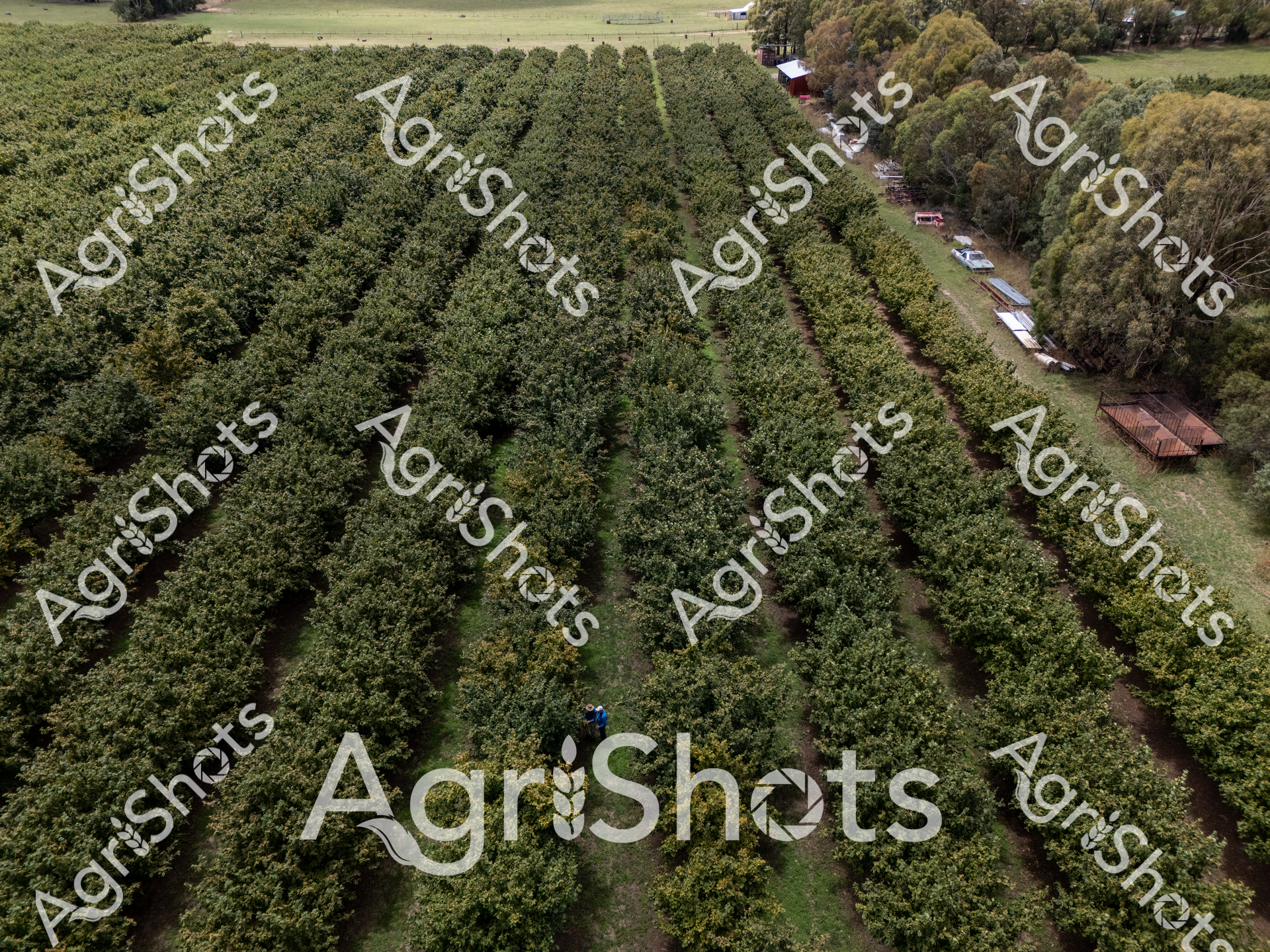
An aerial view reveals a meticulously organized hazelnut orchard in the Central West region of New South Wales. Rows of mature trees with dense green and golden-yellow foliage create a precise geometric pattern across the landscape, indicating the changing seasonal colors of late summer or early autumn. A small figure can be seen working among the trees, suggesting careful orchard maintenance and hands-on management of the crop. The ground between the trees shows varying textures of grass and soil, with clear pathways separating each precisely planted row. Sunlight filters through the canopy, casting subtle shadows and highlighting the lush vegetation's intricate details. The orderly arrangement speaks to the sophisticated agricultural practices of modern nut farming, showcasing the careful cultivation and systematic approach to orchard management in this productive agricultural region.
Similar media
 Image
Image
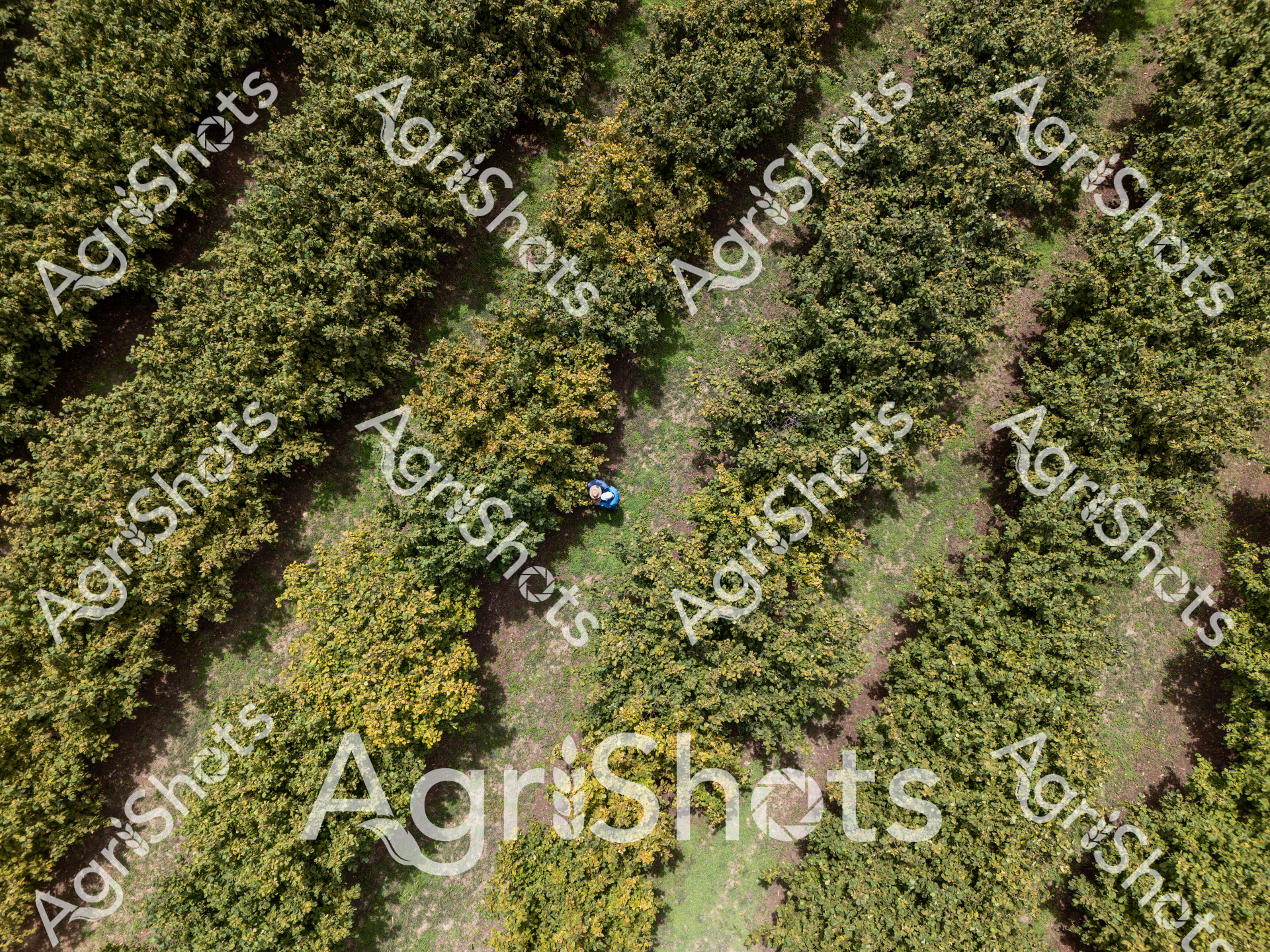
Aerial view of a meticulously arranged hazelnut orchard in the Central West Region of New South Wales, bathed in the golden light of high summer. Symmetrical rows of densely planted hazelnut trees stretch across the landscape, their lush green canopies creating a textured mosaic of foliage and interconnected branches. Neat earth pathways separate each carefully cultivated row, allowing access for maintenance and harvesting equipment. A small blue object - potentially a harvesting marker or agricultural tracking device - provides a subtle point of contrast against the rich green and brown natural palette of the orchard. The overhead perspective reveals the precision of modern agricultural planning, showcasing how carefully managed orchards maximize productive land use while maintaining the natural beauty of the landscape. The uniform yet organic arrangement speaks to the sophisticated agricultural practices of New South Wales' nut farming industry, highlighting the delicate balance between human intervention and natural growth.
 Image
Image
Aerial view of a meticulously cultivated hazelnut orchard nestled in the Central West Region of New South Wales. Rows of densely planted hazelnut trees create a lush green and golden-yellow tapestry, their canopies spreading uniformly across the carefully managed landscape. A small blue object—likely a harvesting or monitoring device—provides a subtle point of contrast against the verdant agricultural terrain. The orchard demonstrates precision agricultural practices, with clearly defined rows and strategic spacing between trees to optimize growth and eventual nut production. Varying shades of green suggest different stages of leaf maturity, hinting at the seasonal rhythms of nut cultivation. The overhead perspective reveals the systematic approach of modern Australian hazelnut farming, showcasing the intricate relationship between careful agricultural management and the natural growth patterns of these productive trees.
 Image
Image
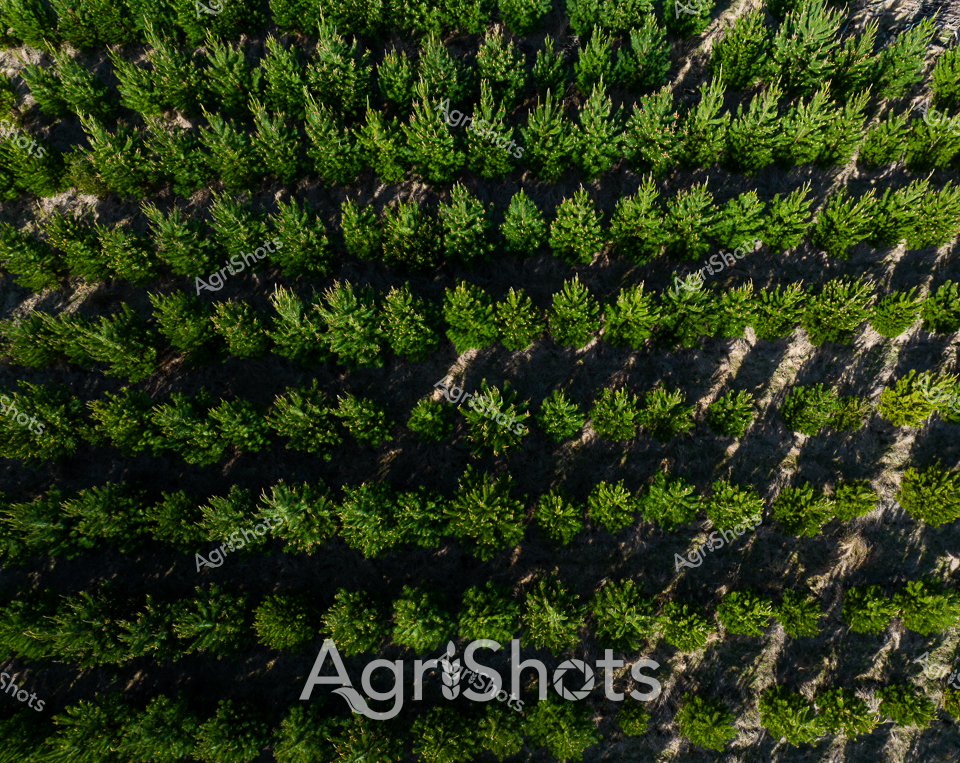
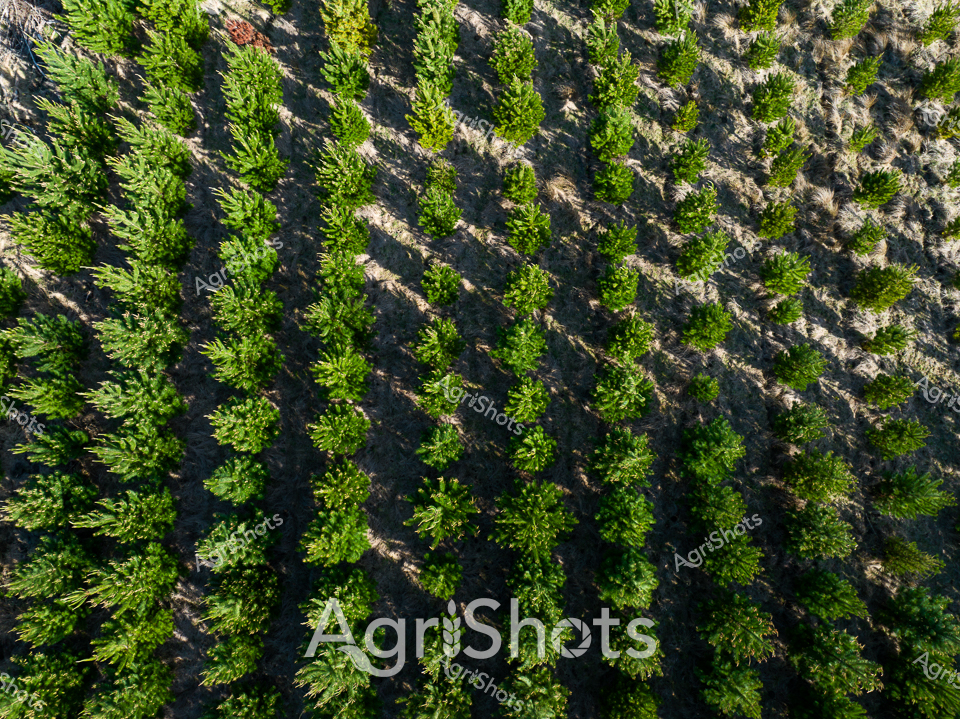
Precision-planted pine sentinels rise in geometric symmetry, their vibrant emerald needles contrasting against weathered grey bark and rich dark soil. This meticulously managed Tasmanian forestry plantation reveals the calculated artistry of sustainable timber cultivation, with each conifer positioned in razor-sharp rows that cascade across the undulating landscape. The aerial perspective captures the mathematical perfection of modern silviculture, where every tree represents a calculated investment in carbon sequestration and renewable resource management. Winter's subdued light casts subtle shadows between the dense green ranks, highlighting the regimented growth and strategic spacing that maximizes forest productivity. Each pine tree stands as a testament to Tasmania's sophisticated agricultural approach, transforming rugged terrain into a carefully orchestrated green infrastructure that balances ecological preservation with commercial forestry practices. The intricate pattern speaks to generations of agricultural expertise, where landscape engineering meets environmental stewardship.
 Image
Image
Verdant pine sentinels stand in precise geometric rows, a meticulously ordered forest plantation captured from an aerial perspective. The young evergreen trees burst with vibrant green needles, creating a rhythmic pattern of uniform saplings against dark, rich soil. Shadows cast by each tree create striking diagonal lines, revealing the calculated spacing and agricultural precision of this Tasmanian forestry operation. Tasmania's cool winter climate nurtures these densely planted pine trees, which represent a strategic carbon sequestration and timber production investment. The uniform grid of trees demonstrates modern silvicultural techniques, where each sapling is positioned to maximize growth potential and future harvesting efficiency. This aerial view transforms an agricultural landscape into a mesmerizing geometric tapestry of green and earth tones, showcasing the intersection of environmental management and commercial forestry.
 Image
Image
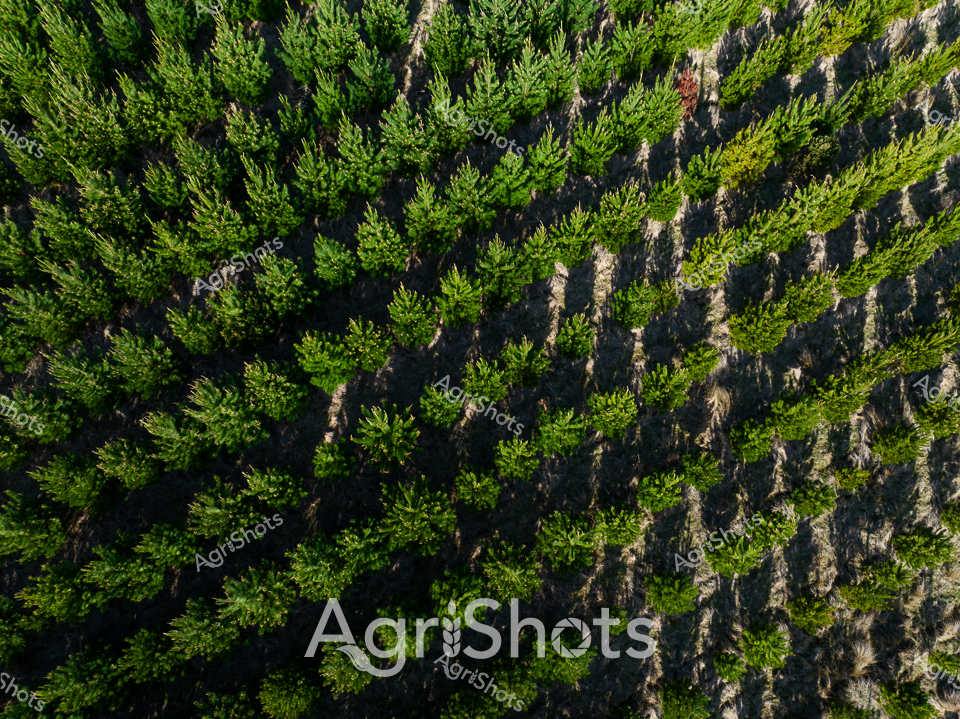
A dense evergreen pine plantation stretches across the Tasmanian landscape, captured from an overhead perspective revealing precise geometric rows of vibrant green conifer trees. Sharp-needled branches create a lush carpet of forest green, interspersed with rugged stone-gray vertical trunks creating a striking linear pattern. Each tree stands uniform yet slightly individualistic, planted with mathematical precision yet maintaining a natural organic rhythm across the undulating terrain. The aerial view highlights the meticulous planning of commercial forestry, where carefully cultivated rows represent sustainable timber production - a critical agricultural industry for Tasmania's rural economy. Winter's cool light enhances the contrast between the deep verdant green of the young pines and the rough textural bark, showcasing the calculated beauty of managed woodland resources. This image captures the intersection of agricultural science, environmental stewardship, and economic planning in one of Australia's most productive timber regions.
 Image
Image
Verdant pine saplings stand in precise diagonal rows, their vibrant green needles creating a geometric tapestry against the rich, dark soil of a meticulously planned forestry plantation. Captured from an aerial perspective, the young trees demonstrate the systematic approach of modern Tasmanian silviculture, each sapling carefully spaced to optimize growth and future timber yield. The winter light casts long shadows between the rows, highlighting the regimented planting and the careful land management practices of the region. This aerial view reveals the intricate planning behind sustainable forestry, showcasing how carefully cultivated tree plantations contribute to carbon sequestration and renewable timber resources. The uniform yet natural pattern speaks to the precision of agricultural science and the careful balance between human intervention and natural growth. The lush green against the textured earth represents hope, regeneration, and the ongoing cycle of sustainable land use in Tasmania's agricultural landscape.
 Image
Image
Sunlight cascades across precision-planted hazelnut orchards in New South Wales' Central West Region, revealing orderly rows of dense green canopies stretching toward distant eucalyptus woodland edges. Mature hazelnut trees stand in perfectly aligned linear plantations, their uniform branching creating a verdant geometric landscape that speaks to meticulous agricultural management. A narrow access lane bisects the orchard, allowing glimpses of farm infrastructure including rust-red storage sheds and utilitarian vehicles positioned at the plantation's perimeter. The aerial perspective captures the immaculate cultivation technique, with each tree spaced with mathematical regularity, demonstrating contemporary Australian nut farming's sophisticated approach to productive landscapes. Variations in green hues - from deep olive to lighter sage - indicate different stages of leaf maturity and orchard health, while the surrounding pastoral landscape suggests a classic summer scene in rural New South Wales. The image embodies the precision, scale, and natural beauty of contemporary Australian agricultural practice, highlighting how technological understanding and careful land management transform natural environments into productive agricultural systems.
 ▶ Video
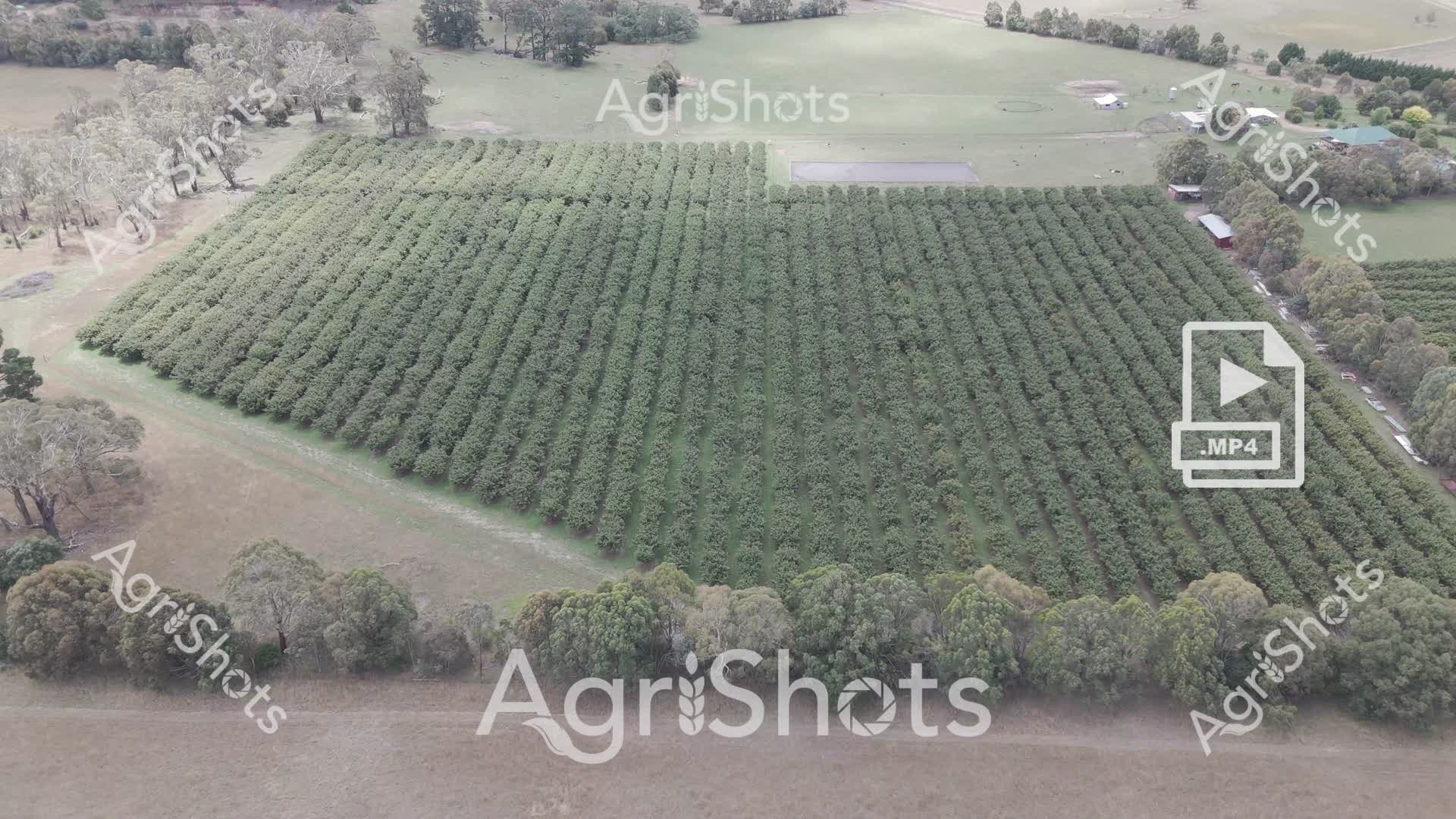
Cascading rows of meticulously planted hazelnut trees stretch across the undulating landscape of New South Wales' Central West Region, creating a verdant geometric pattern against the pastoral backdrop. The aerial perspective reveals a precisely cultivated orchard, with uniform green trees standing in disciplined lines, their canopies forming a lush carpet that contrasts beautifully with the surrounding grasslands and scattered eucalyptus trees. Captured during the vibrant spring season, the image showcases the agricultural precision of Australian nut farming, where each row represents a carefully planned investment in productive land management. Soft, muted greens dominate the scene, highlighting the health and maturity of the hazelnut plantation, while the surrounding landscape of open paddocks and native woodlands provides a quintessential Australian rural context. The drone's eye view emphasizes the scale and sophistication of modern agricultural practices, transforming what was once raw countryside into a highly organized and productive agricultural enterprise. In the distance, farm infrastructure - including sheds and access roads - hints at the comprehensive agricultural ecosystem supporting this thriving hazelnut orchard.