About this image
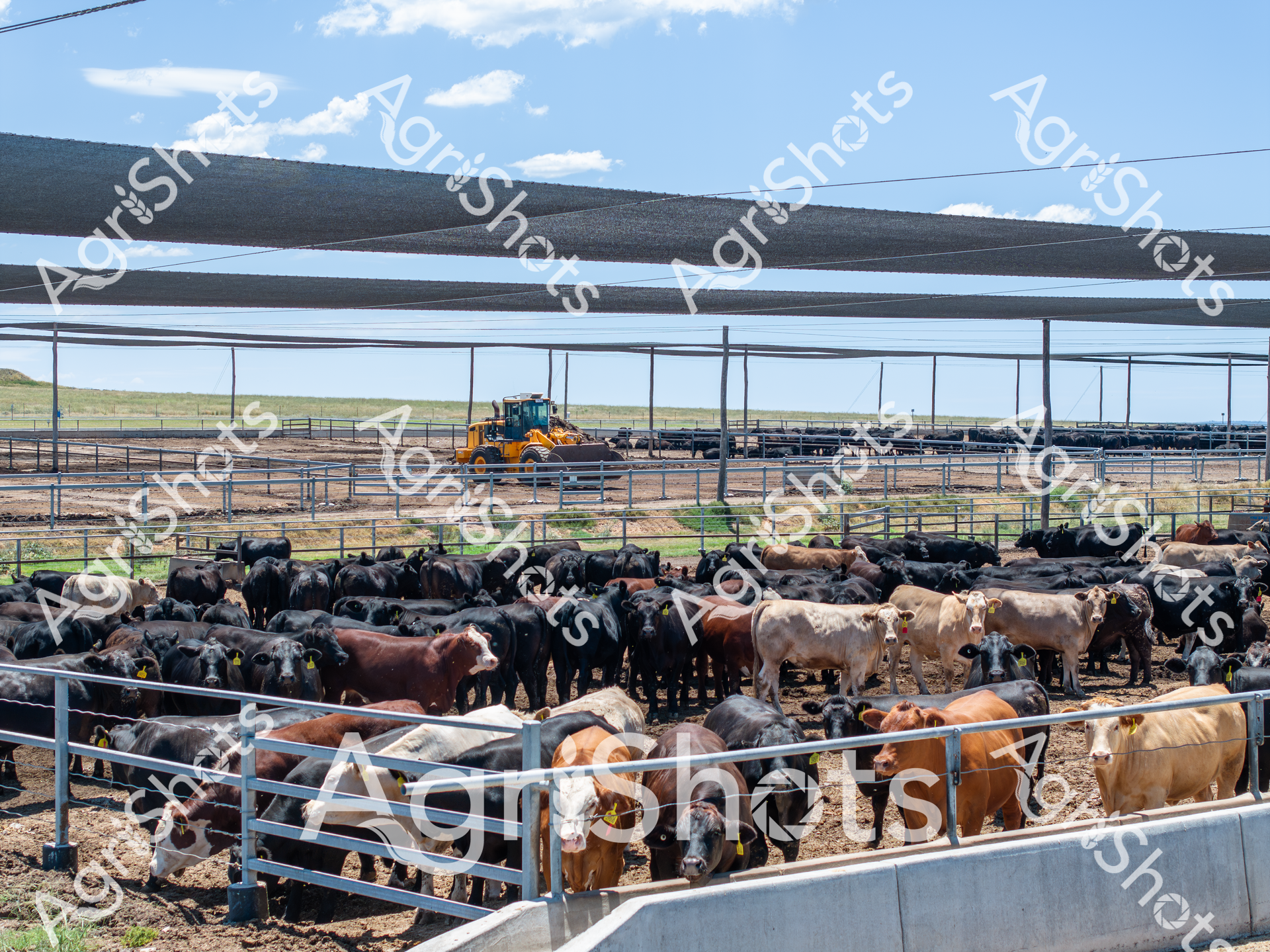
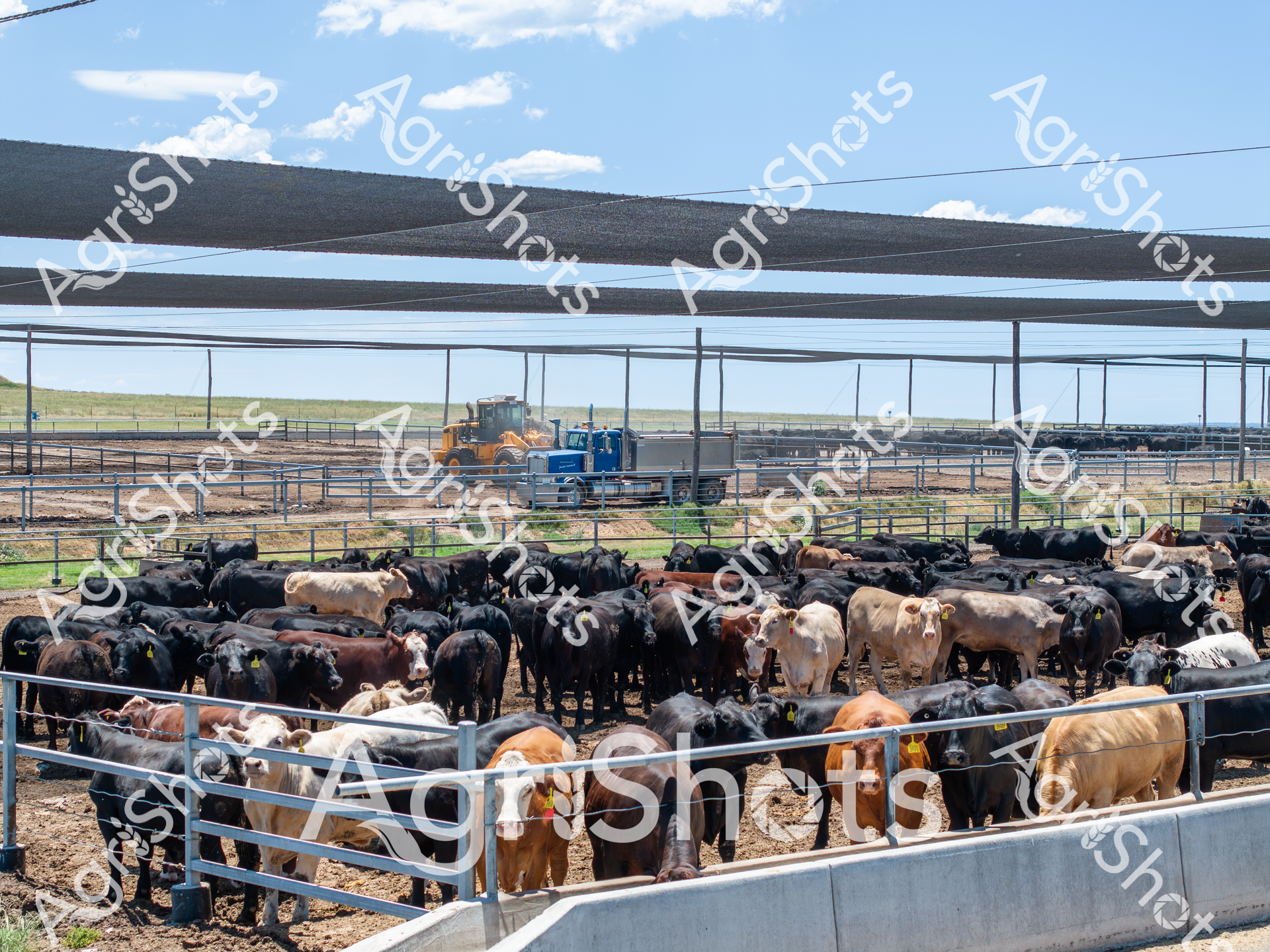
A bustling cattle yards in the heart of Queensland showcases a diverse herd of cattle densely packed beneath expansive shade sails. Angus, Hereford, and Brahman-cross cattle stand shoulder to shoulder, their coats ranging from deep obsidian black to rich chestnut and pristine white, each marked with a vibrant yellow ear tag. The dry, packed earth of the cattle yard stretches beneath their hooves, with industrial-grade metal fencing and structural supports creating a geometric backdrop against the wide, cloud-dappled sky. Powerful machinery - a yellow excavator and additional farm vehicles - sit quietly in the background, suggesting the sophisticated infrastructure of modern agricultural operations. The cattle appear calm and well-managed, their varied colors and markings creating a living tapestry that speaks to careful breeding and strategic livestock management. Overhead, the strategically positioned shade sails provide critical protection from the intense Queensland sun, highlighting the nuanced care and technological innovation of contemporary cattle farming.
Similar media
 Image
Image
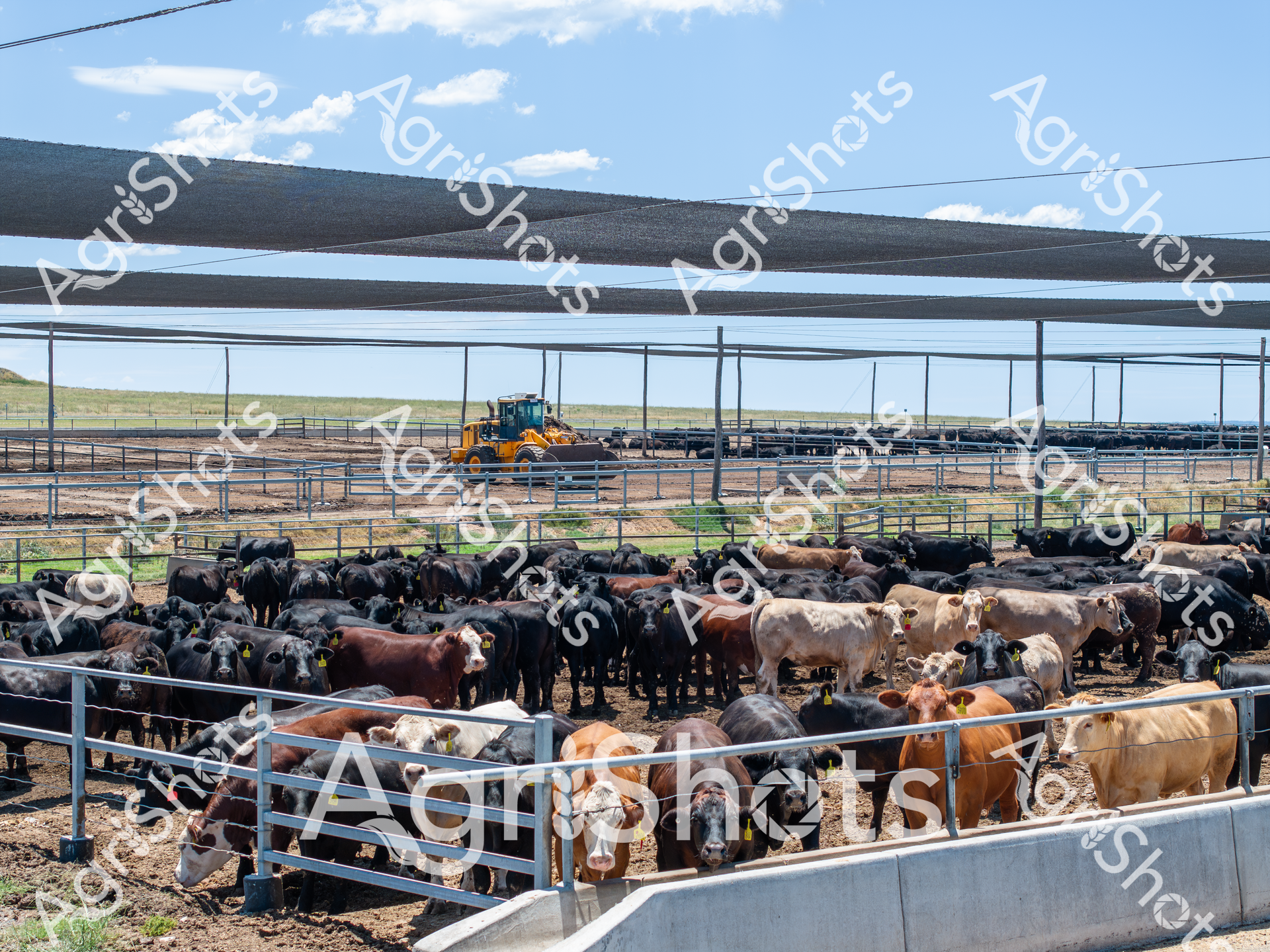
In the expansive cattle yards in a bustling feedlot pulses with agricultural activity under the brilliant Queensland summer sky. A yellow front-end loader methodically moves across the carefully designed livestock pens, preparing and maintaining the ground for a diverse herd of black, brown, and tan cattle. Overhead, strategically positioned shade sails provide critical relief from the intense sunlight, creating a structured canopy that protects the animals from heat stress. The cattle, sporting distinctive yellow ear tags, are densely clustered within meticulously organized metal pen enclosures, their varied coat colors creating a rich tapestry of bovine diversity. Precision is evident in every aspect of this operation - from the geometric layout of the pens to the careful waste management practices being implemented by the loader. The scene captures the sophisticated, modern approach to cattle farming: a harmonious blend of animal welfare, operational efficiency, and environmental consciousness under the wide, cloud-dappled Australian sky.
 ▶ Video
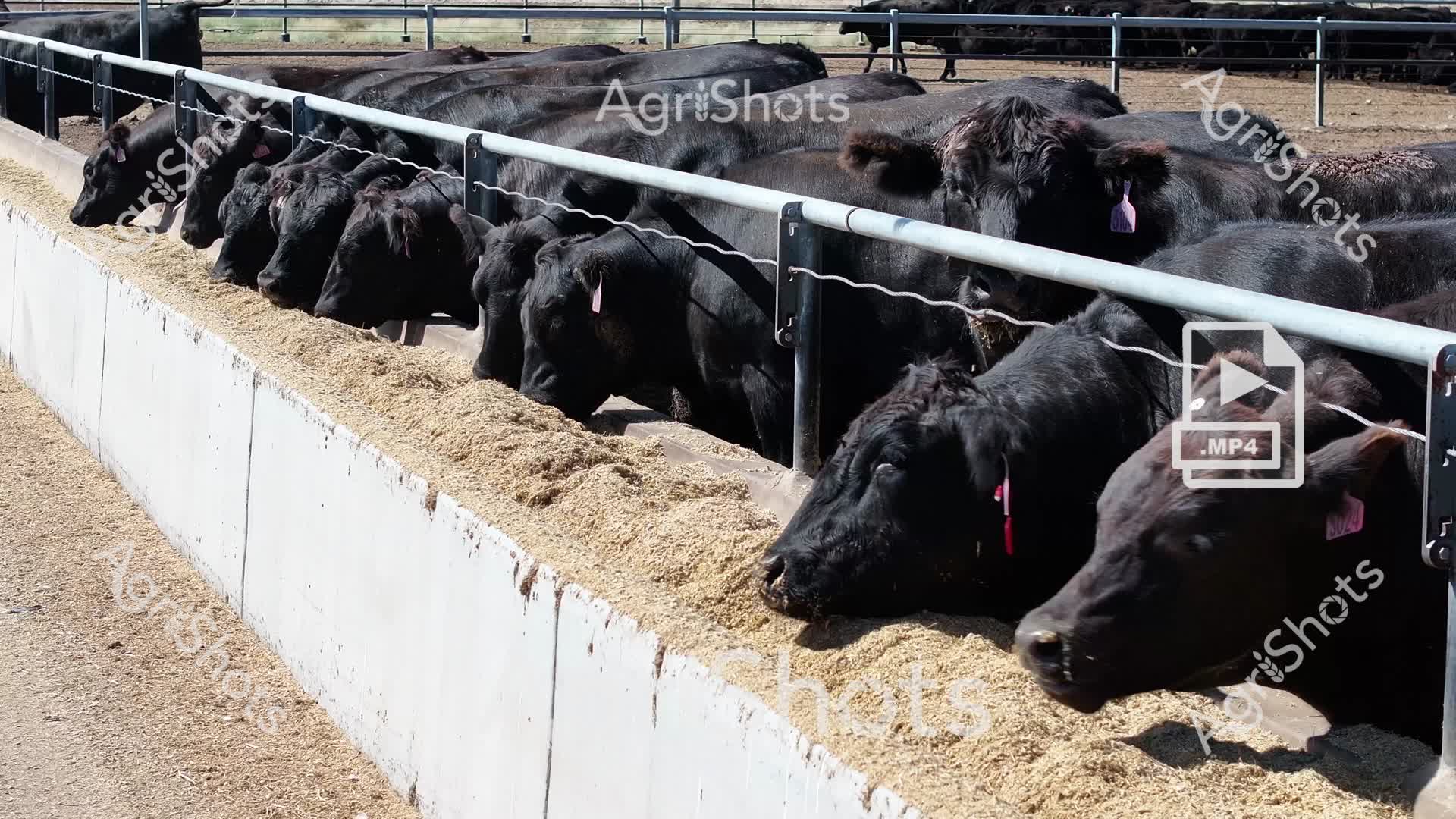
Black Angus cattle cluster tightly along a concrete feeding trough in a modern commercial feedlot, their sleek dark coats contrasting against the sandy-colored feed and stark white concrete barrier. Rows of muscular cattle with pink ear tags lean forward, methodically consuming a measured grain mixture, demonstrating the precision of contemporary beef production systems. Steel railings divide the feeding pens, creating a structured environment that maximizes efficient livestock management. The cattle appear healthy and well-conditioned, their uniformity reflecting careful genetic selection and professional agricultural practices typical of Queensland's advanced beef industry. Each animal stands shoulder-to-shoulder, representing the industrial scale of modern meat production, where nutrition, space, and animal health are carefully controlled. The scene captures the intersection of agricultural technology and livestock management, showcasing how Australian farmers optimize beef production through systematic feeding approaches.
 Image
Image
Burnished bronze and jet-black cattle cluster within meticulously maintained steel livestock pens, their yellow ear tags glinting under the intense Queensland summer sunlight. A robust yellow front-end loader moves deliberately in the background, preparing the feedlot infrastructure for optimal animal management. Expansive shade cloth structures stretch across the top of the pens, providing critical heat relief for the herd during the scorching regional temperatures of Queensland. The carefully designed environment reveals sophisticated waste management and pen maintenance practices, with concrete feed troughs and carefully graded ground ensuring animal health and comfort. Muscular beef cattle of multiple breeds - predominantly Angus and Brahman crossbreeds - stand clustered together, demonstrating the genetic diversity and strategic breeding approaches of modern Australian cattle production. The landscape beyond the pens reveals a classic Queensland agricultural vista - vast, open grasslands meeting an azure sky, with electrical infrastructure subtly indicating the human engineering that enables agricultural productivity in challenging environments.
 ▶ Video
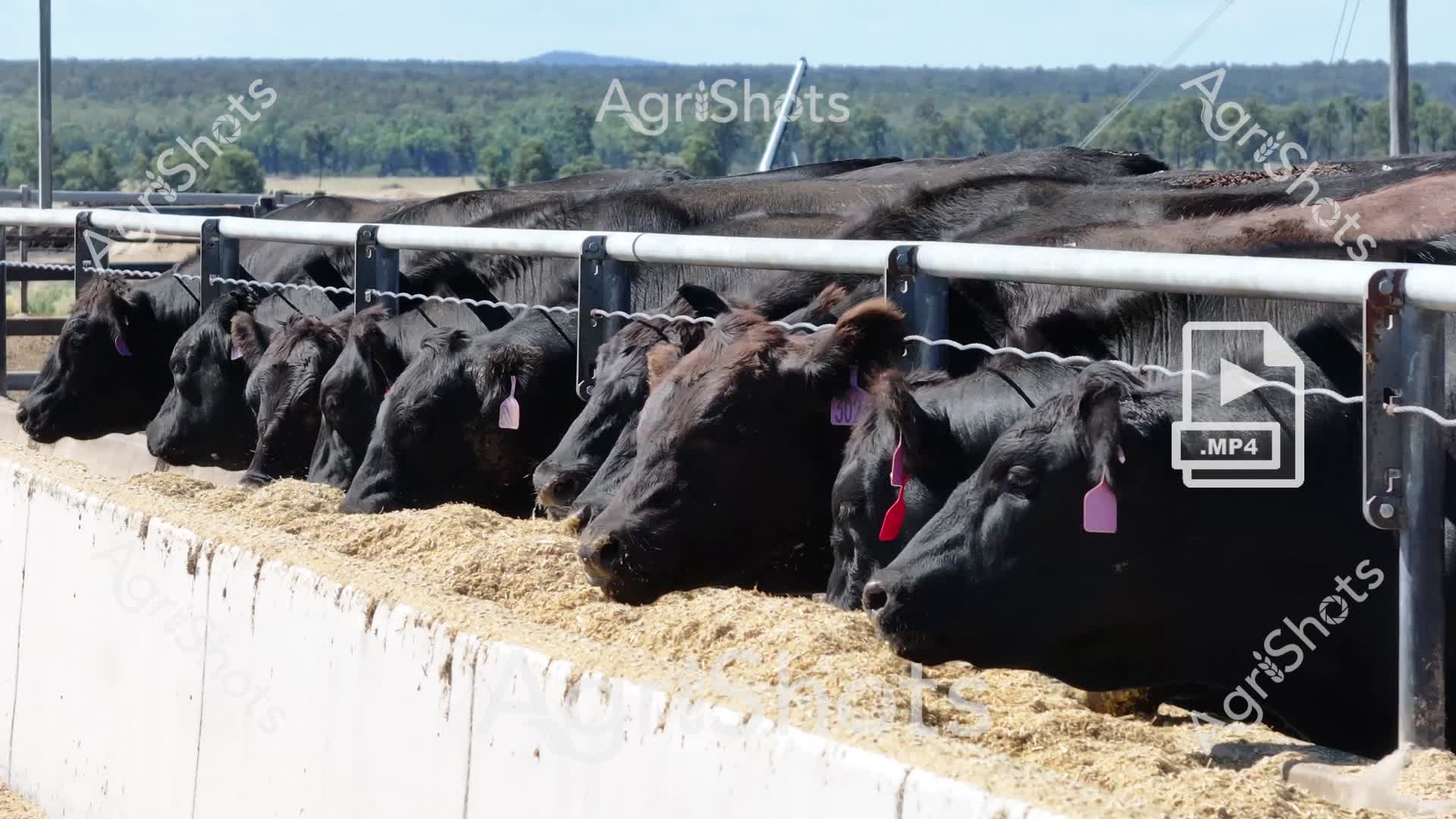
A precision-engineered feedlot displays a line of premium Wagyu cattle lined up along a concrete feed bunk in rural Queensland. Sleek black cattle with distinctive ear tags in pink and purple stand shoulder-to-shoulder, systematically consuming a carefully prepared feed mixture of straw and grain. The uniform white concrete bunk and steel feeding infrastructure showcase modern agricultural engineering, designed for optimal livestock management and nutrition. Distant tree-lined horizons and soft blue skies provide a natural backdrop to this industrial-grade livestock facility, highlighting the sophisticated approach to beef production in Australian agriculture. Each animal appears calm and well-conditioned, representing the high standards of animal husbandry in contemporary cattle farming. The meticulously organized feeding arrangement demonstrates the technical precision behind commercial beef production.
 Image
Image
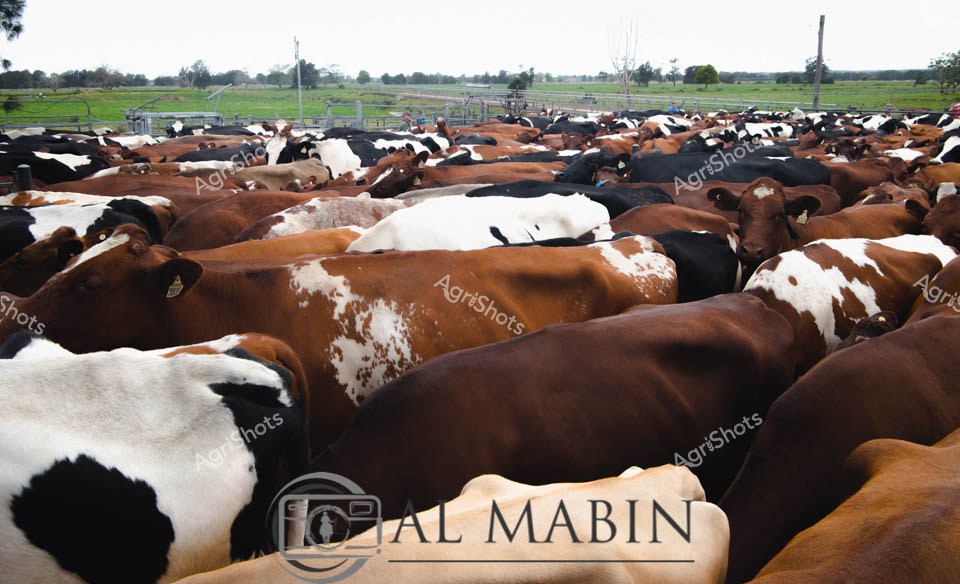
Packed tightly within a fenced pastoral landscape, a diverse herd of dairy cattle showcases the rich genetic variety of Australian livestock breeding. Holsteins with classic black and white patches intermingle with rich mahogany and cream-spotted Illawara cattle, creating a mosaic of bovine color and texture. The densely clustered animals fill the frame, their muscular bodies pressed together in a tight collective, suggesting an efficient modern dairy operation in New South Wales. Metal infrastructure and paddock fencing in the background indicate a professionally managed agricultural facility, with green pastures and scattered trees creating a quintessential rural Australian backdrop. Each animal bears an ear tag, highlighting the systematic approach to livestock management and tracking in contemporary dairy farming.
 Image
Image
A dense herd of cattle clusters within a meticulously maintained feedlot, their diverse coat colors ranging from deep black to rich tan and pale cream. Overhead, expansive shade sails provide critical relief from the intense Queensland summer sun, stretching across multiple livestock pens. A robust yellow front-end loader sits strategically positioned in the background, prepared for pen maintenance and waste management tasks essential to the facility's operational efficiency. Blue metal fencing and concrete barriers define precise boundaries, while yellow ear tags mark each animal, suggesting systematic tracking and management. The landscape reveals a classic Queensland agricultural setting - flat, arid terrain with hints of green pasture, under a brilliant blue sky scattered with wispy clouds. The scene captures the intricate infrastructure of modern Australian cattle production, where animal welfare, systematic organization, and environmental adaptability converge in a carefully engineered agricultural environment.
 Image
Image
Angus and Santa Gertrudis cattle crowd a carefully managed feedlot, their sleek black and rich mahogany coats contrasting against the pale, dusty earth of rural New South Wales. Yellow identification tags punctuate the animals' ears, marking each beast within this large-scale farming operation designed to optimize beef production. Robust steel infrastructure - a network of robust fencing and sheltering frames - contains the densely packed herd, providing structured movement and controlled nutrition zones. The dry, sunlit landscape stretches behind the cattle, with distant eucalyptus trees softening the horizon and casting long shadows across the packed earthen paddock. This meticulously organized agricultural scene represents the precision of modern Australian beef production, where careful breed selection, nutritional management, and systematic infrastructure come together to drive efficiency. The cattle stand grouped but alert, their muscular frames testament to the careful genetic and nutritional management of this contemporary feedlot enterprise.
 Image
Image
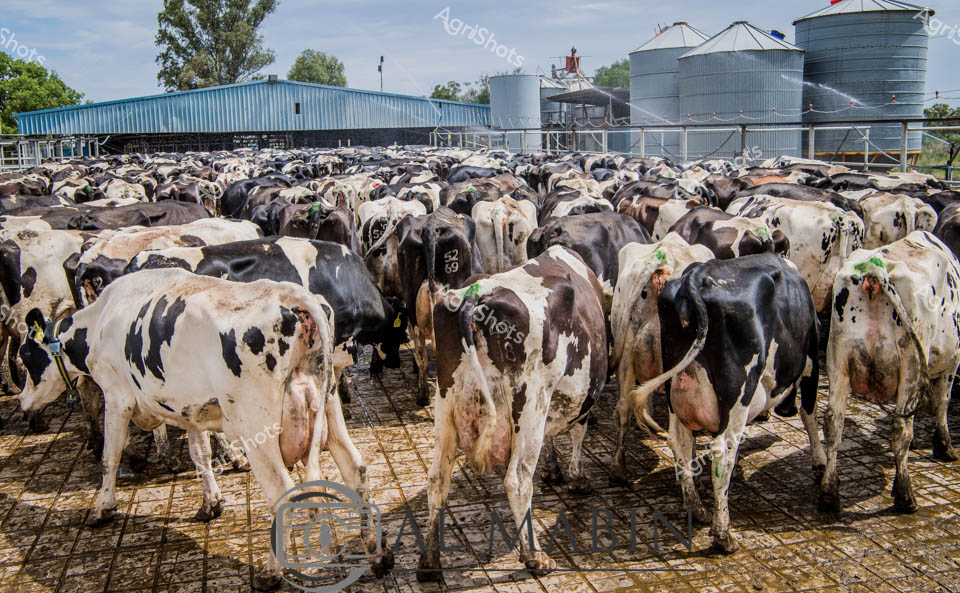
Holstein dairy cows cluster tightly in a modern agricultural facility, their distinctive black and white coats creating a rich patchwork against a backdrop of gleaming galvanized steel grain silos and a blue industrial building. The concrete feeding pad provides a structured platform for this high-density herd, with each cow bearing a numbered tag indicating careful livestock management. Muscular udders and varied coat patterns reveal these are prime milking cattle, likely a carefully bred Holstein stud herd in Victoria's renowned Goulburn Region. Overhead, a crisp blue sky and distant trees suggest a classic Australian rural landscape, while the precision of the facility speaks to contemporary agricultural practices. The cows stand in close proximity, their bodies reflecting the robust health of a well-managed dairy operation, with mechanical infrastructure suggesting sophisticated production systems. The scene captures the intersection of traditional animal husbandry and modern agricultural technology, a hallmark of Australian rural enterprise.