About this image
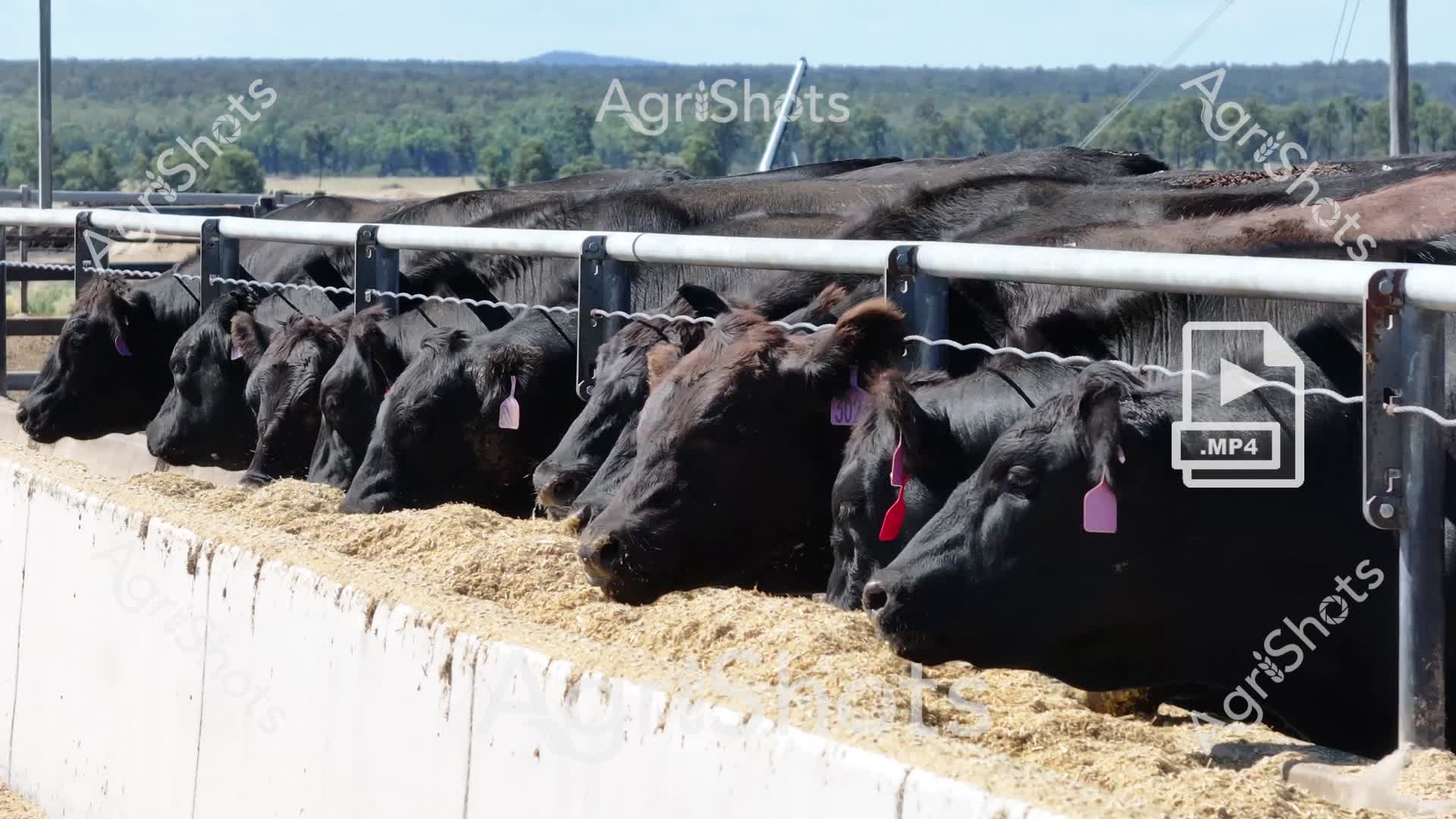
Black Angus cattle cluster tightly along a concrete feeding trough in a sophisticated commercial feedlot, their sleek dark coats contrasting against the pale straw feed. Rows of robust beef cattle, each tagged with a distinctive pink identification marker, stand shoulder-to-shoulder consuming a carefully formulated feed ration. White feeding barriers and sturdy steel rails define their structured eating space, with forested hills visible in the distant background suggesting this facility is situated in a rural agricultural region. The precision of the feedlot - with its uniform animal placement, clean concrete infrastructure, and organized feeding system - demonstrates modern large-scale cattle production techniques. These Angus cattle represent a high-value beef breed, strategically managed to optimize weight gain and meat quality through controlled nutrition and environment. The image captures the industrial scale of contemporary beef production, where animal husbandry meets agricultural engineering.
Similar media
 ▶ Video
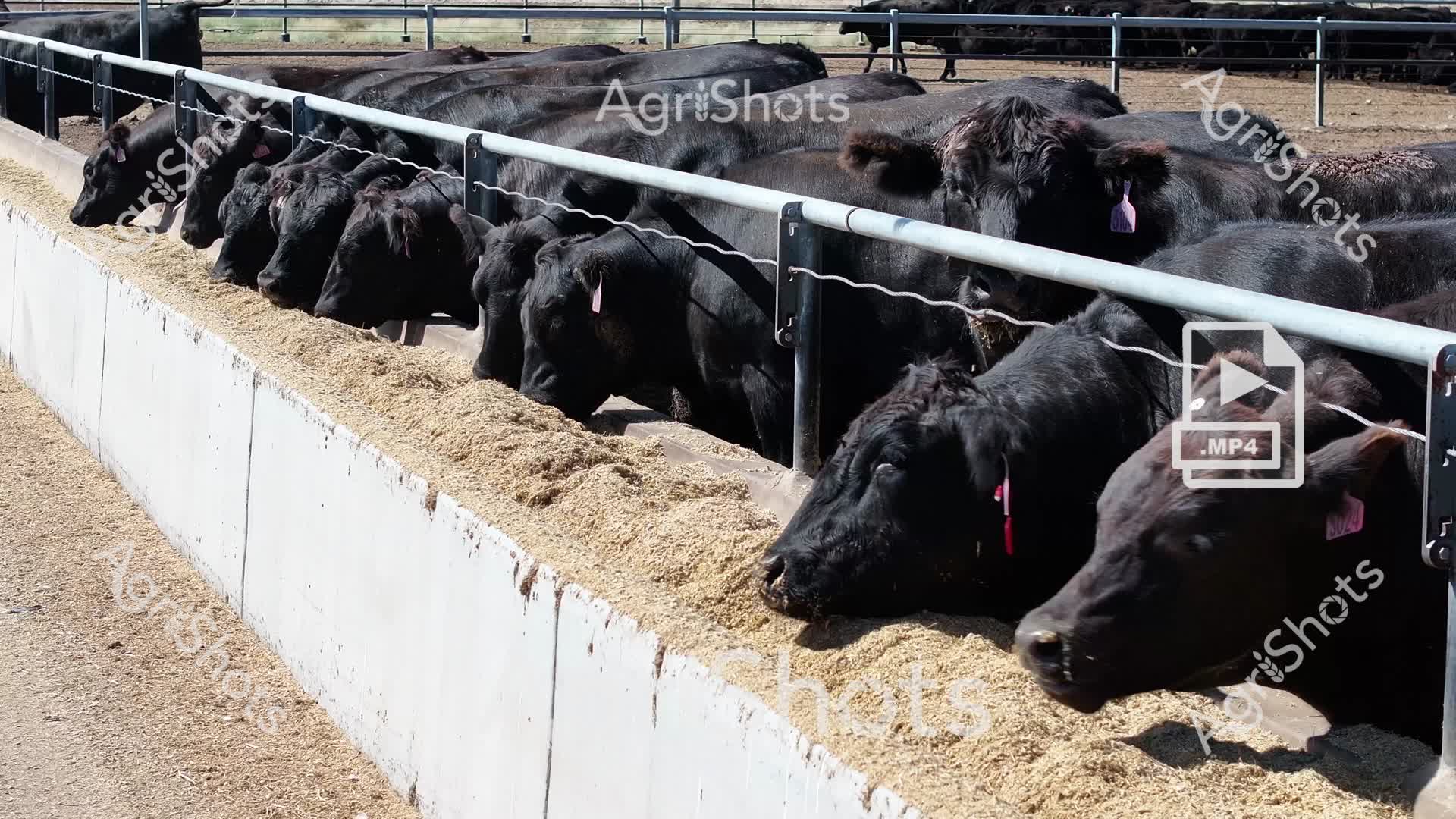
A precision-engineered feedlot displays a line of premium Wagyu cattle lined up along a concrete feed bunk in rural Queensland. Sleek black cattle with distinctive ear tags in pink and purple stand shoulder-to-shoulder, systematically consuming a carefully prepared feed mixture of straw and grain. The uniform white concrete bunk and steel feeding infrastructure showcase modern agricultural engineering, designed for optimal livestock management and nutrition. Distant tree-lined horizons and soft blue skies provide a natural backdrop to this industrial-grade livestock facility, highlighting the sophisticated approach to beef production in Australian agriculture. Each animal appears calm and well-conditioned, representing the high standards of animal husbandry in contemporary cattle farming. The meticulously organized feeding arrangement demonstrates the technical precision behind commercial beef production.
 ▶ Video
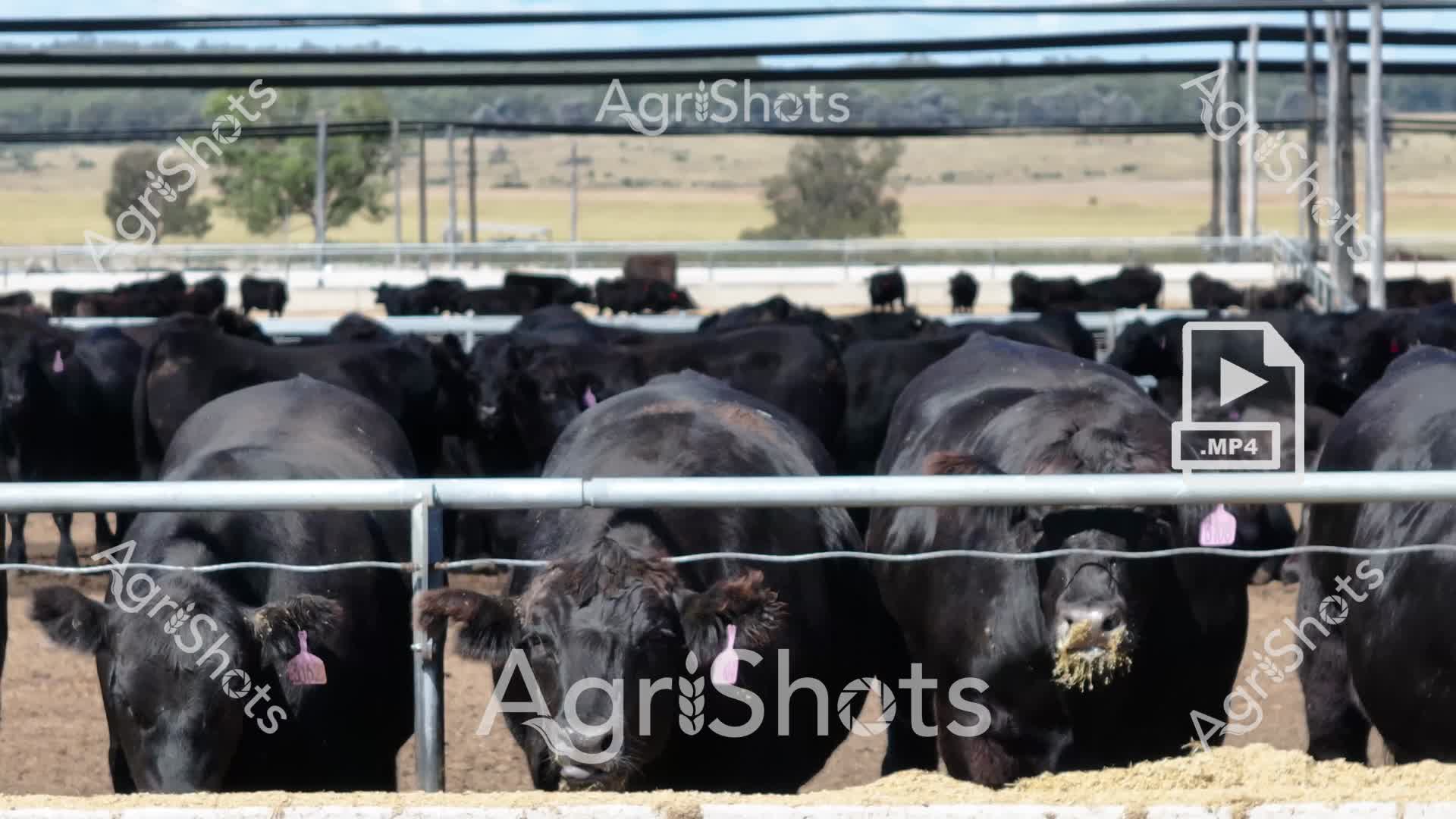
Black Angus cattle cluster tightly along a concrete feeding trough in a modern commercial feedlot, their sleek dark coats contrasting against the sandy-colored feed and stark white concrete barrier. Rows of muscular cattle with pink ear tags lean forward, methodically consuming a measured grain mixture, demonstrating the precision of contemporary beef production systems. Steel railings divide the feeding pens, creating a structured environment that maximizes efficient livestock management. The cattle appear healthy and well-conditioned, their uniformity reflecting careful genetic selection and professional agricultural practices typical of Queensland's advanced beef industry. Each animal stands shoulder-to-shoulder, representing the industrial scale of modern meat production, where nutrition, space, and animal health are carefully controlled. The scene captures the intersection of agricultural technology and livestock management, showcasing how Australian farmers optimize beef production through systematic feeding approaches.
 ▶ Video
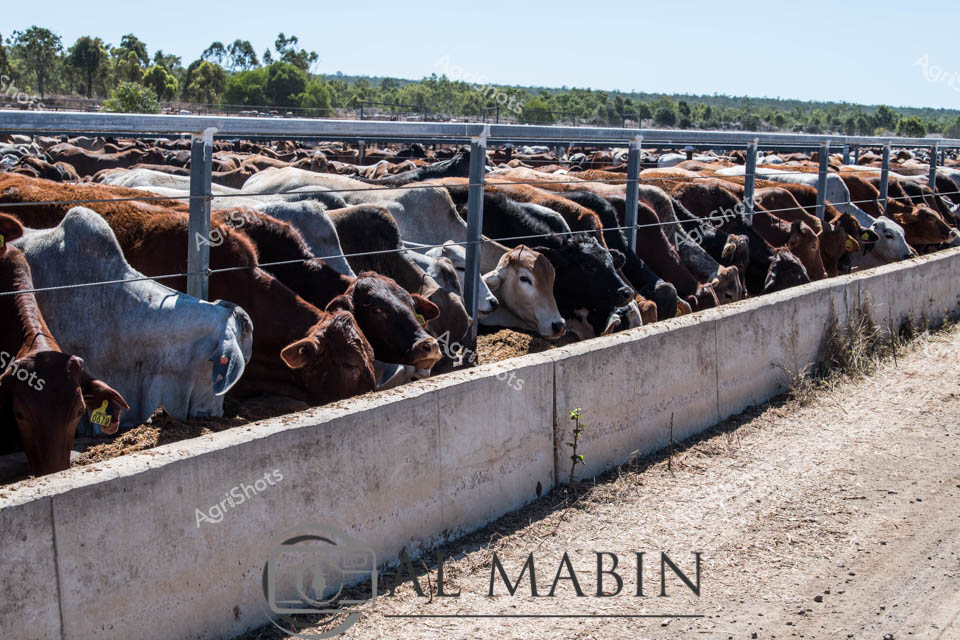
A densely packed feedlot in Queensland showcases a herd of black Wagyu cattle strategically positioned behind robust metal fencing. These high-value beef cattle, characterized by their dark coats and pink ear tags, are closely grouped in a controlled feeding environment with carefully distributed hay and feed. Multiple rows of cattle occupy the frame, demonstrating the systematic approach of modern large-scale livestock management. The dry, compacted ground and metal infrastructure reflect the precision of Australian beef production, with a rural landscape of scattered trees and open paddocks visible in the background. Each animal appears well-conditioned, highlighting the professional standards of this commercial cattle operation. The metallic fencing and systematic layout underscore the industrial scale of contemporary beef production in Queensland's agricultural sector.
 Image
Image
Brahman and composite beef cattle densely pack a concrete feedlot pen under the bright Queensland sun, their varied coats of gray, rust-brown, and black creating a textured mosaic of livestock. Sleek, muscular bodies press against metal railings, each animal tagged and carefully managed as part of a sophisticated beef production system. The neat concrete feed bunk runs the length of the pen, providing uniform access to carefully formulated nutrition that will optimize growth and market readiness. Towering gum trees and native bushland frame the background, a classic Australian agricultural landscape where modern farming practices merge with natural terrain. Yellow ear tags punctuate the herd, marking each animal for tracking and management in this precision agricultural environment. The crisp winter light and dusty ground underscore the robust, industrious character of Queensland's beef industry - a critical segment of the state's agricultural economy that represents generations of pastoral expertise and technological innovation.
 Image
Image
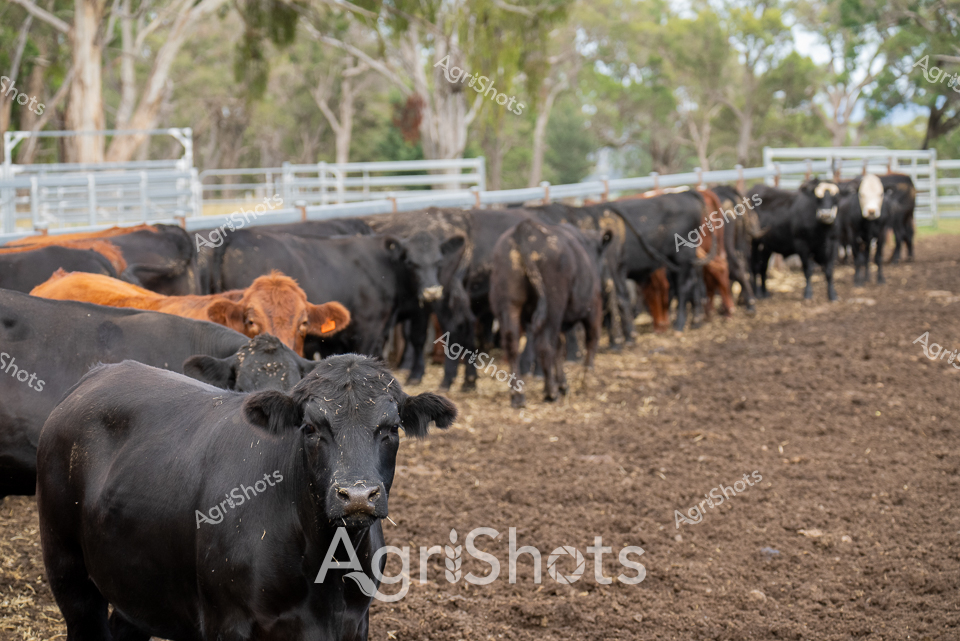
Black Angus cattle cluster in a well-maintained feedlot nestled within the scenic New England region of New South Wales. Rich, dark earth covers the ground where these robust beef cattle stand in neat rows along a feed bunker, their sleek black coats contrasting with a few rusty-brown individuals scattered throughout the herd. Mature cows stand resolute, their muscular frames reflecting the quality of Australian beef production, with white fencing and mature eucalyptus trees creating a pastoral backdrop of muted greens and soft greys. The late summer or early autumn setting suggests optimal feeding conditions, with the cattle looking healthy and well-conditioned against the dappled light filtering through the surrounding woodland. A mix of predominantly black Angus with a few deeper russet-colored animals demonstrates genetic diversity and careful breeding practices typical of progressive Australian cattle management. The carefully arranged feeding area and uniform stance of the cattle highlight the precision and professional approach of modern agricultural livestock production.
 ▶ Video
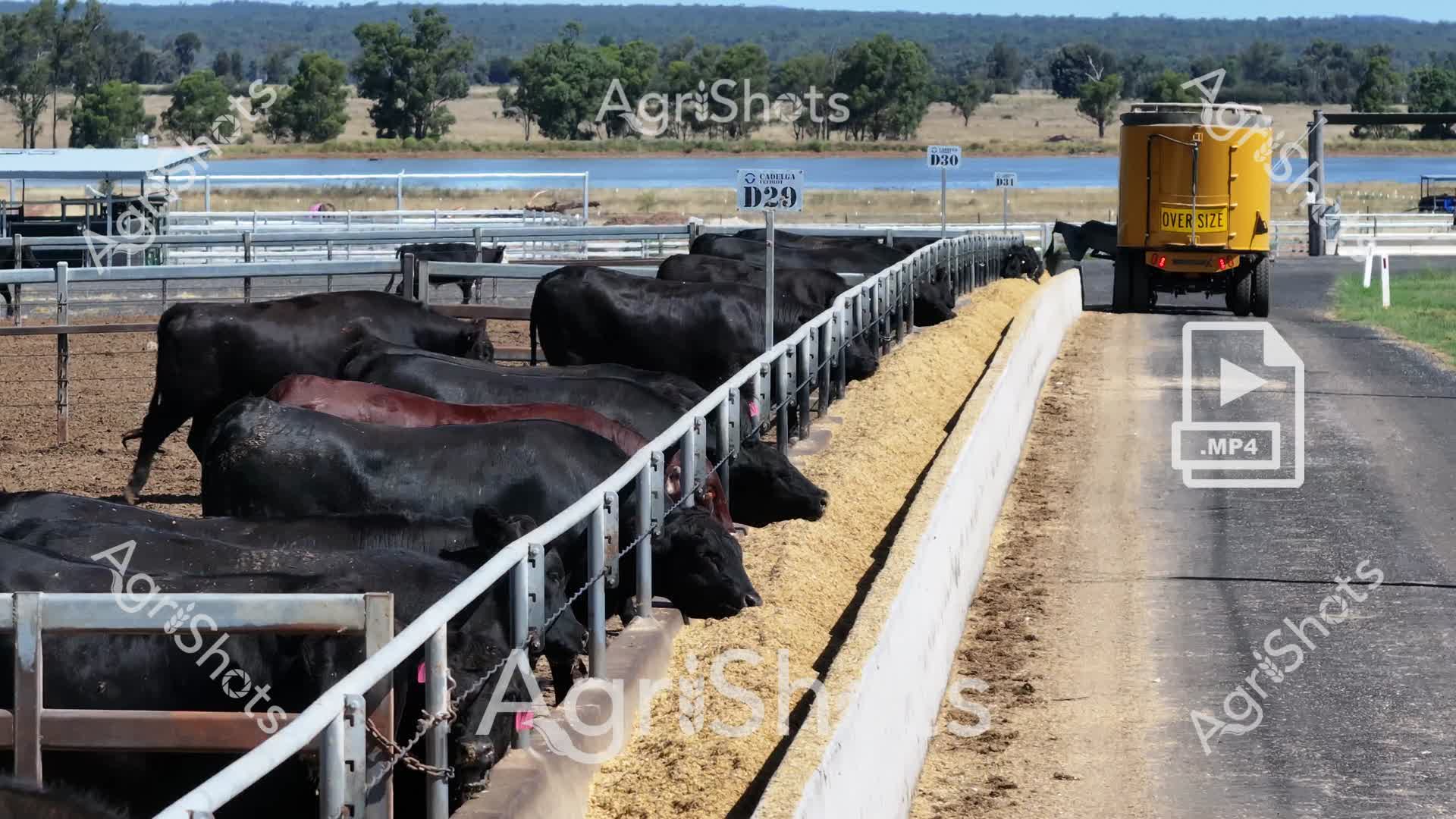
A meticulously managed feedlot in Queensland showcases modern beef cattle production, with a row of sleek black Wagyu cattle positioned along a precisely engineered feeding station. Robust steel railings contain the cattle, who are methodically consuming a golden-yellow feed mixture spread along a concrete feeding trough. A large yellow "OVER SIZE" marked vehicle sits adjacent to the feeding area, suggesting sophisticated agricultural logistics and equipment management. The landscape beyond reveals a classic Australian rural backdrop of scattered gum trees and rolling paddocks, creating a panoramic view of contemporary cattle farming infrastructure. The cattle appear calm and well-conditioned, their dark coats contrasting sharply with the pale feed and concrete surfaces, embodying the high-standards of Australian beef production. The carefully structured feeding system demonstrates the precision and technological advancement of modern agricultural practices in livestock management.
 Image
Image
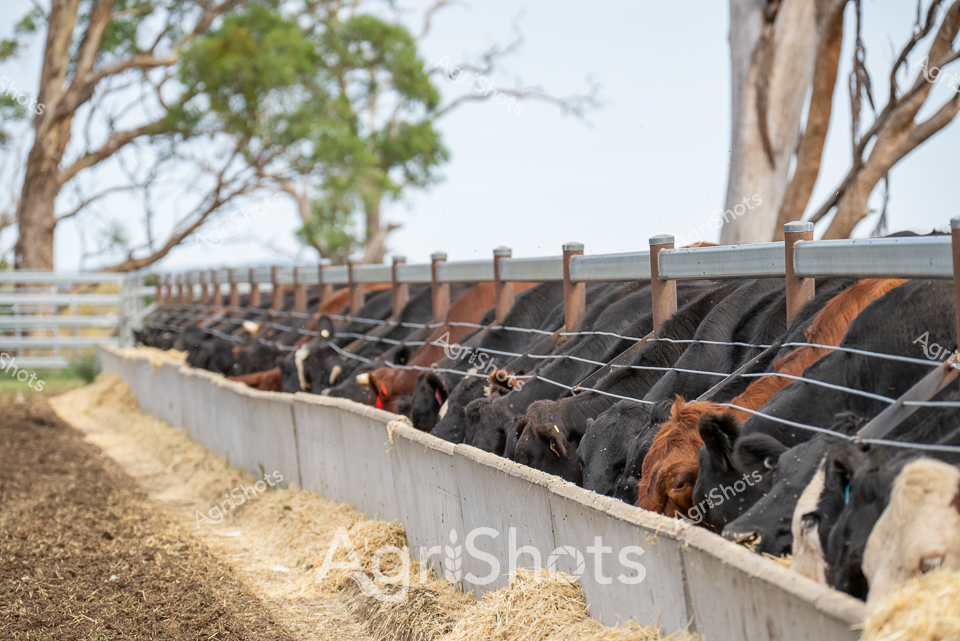
Sleek black and rich chestnut-coated beef cattle line a concrete feed bunker under towering eucalyptus trees, creating a quintessential New England agricultural landscape in New South Wales. The precisely engineered feeding station features sturdy metal rails supporting a long concrete trough filled with golden hay, allowing each animal controlled access to nutrition. Mature cattle stand shoulder-to-shoulder, their muscular frames representing carefully bred livestock optimized for meat production. Soft summer or autumn light filters through sparse tree branches, casting gentle shadows across the dry, packed earthen ground alongside the feeding area. The metallic infrastructure, organic natural elements, and carefully managed livestock represent the sophisticated intersection of agricultural science and pastoral tradition characteristic of Australian cattle farming. This methodical, efficient feeding system demonstrates the region's commitment to advanced livestock management techniques, balancing animal welfare with productive agricultural practices.
 ▶ Video
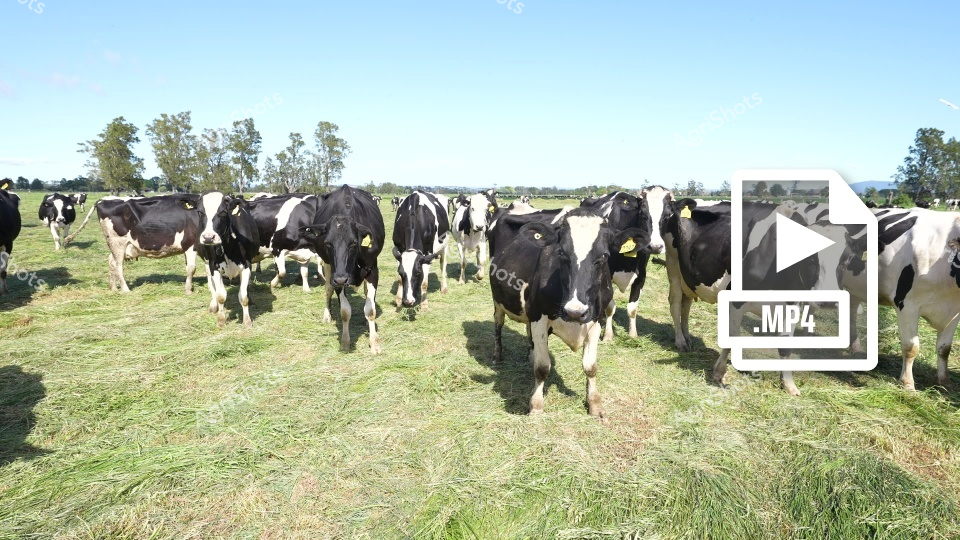
A herd of Holstein dairy cows grazes on lush green pastures under a clear blue sky in rural New South Wales. These black and white spotted cattle, identifiable by their distinctive coloration, stand in a grassy field with trees in the background, representing a typical scene from Australian dairy farming.