About this image
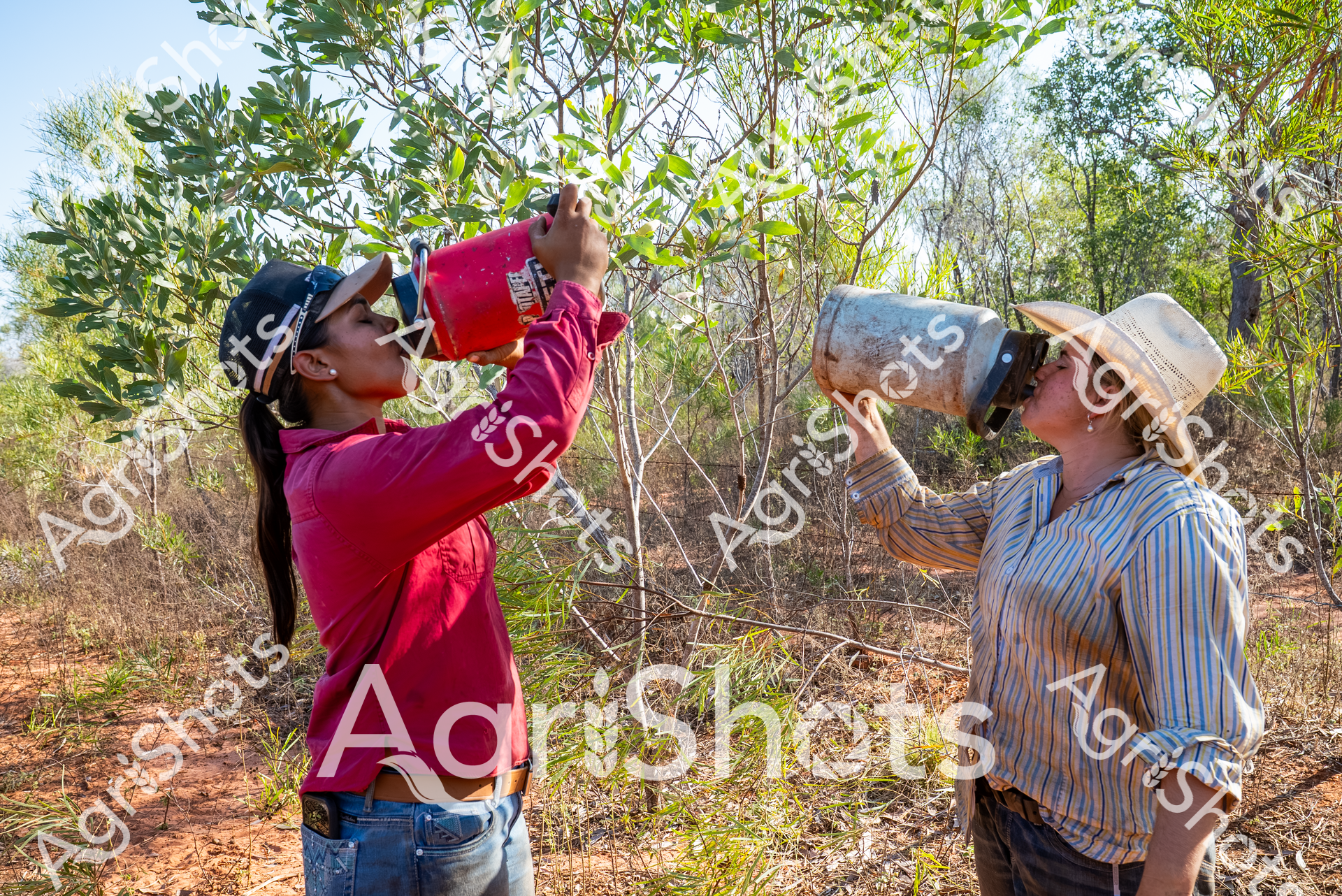
Two women wearing hats drink from large water bottles in a dry, bushy landscape typical of Western Australia's Kimberley region. Dressed in a pink jacket and striped shirt, they appear to be taking a rehydration break during outdoor work, surrounded by green shrubs and trees under a bright sky. Their Yeti water bottles suggest they're prepared for the harsh spring conditions of this remote agricultural station.
Similar media
 Image
Image
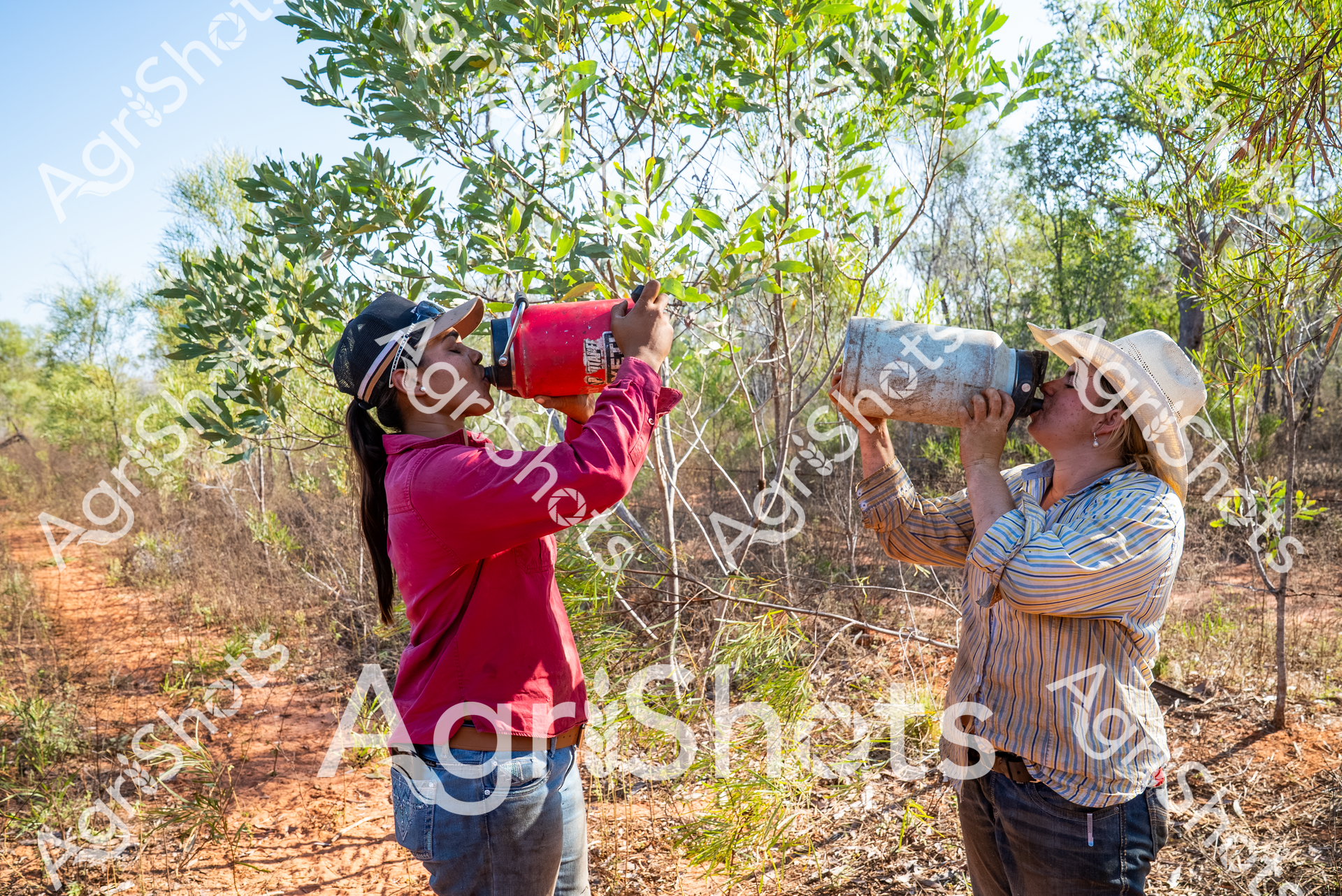
Two women drink from large water bottles while standing amid sparse trees and reddish earth, suggesting they are working outdoors in a rural or agricultural setting, likely in Western Australia's Kimberley region. Their rehydration break highlights the importance of staying hydrated during challenging outdoor work, with their contrasting pink and striped shirts standing out against the rugged landscape.
 Image
Image
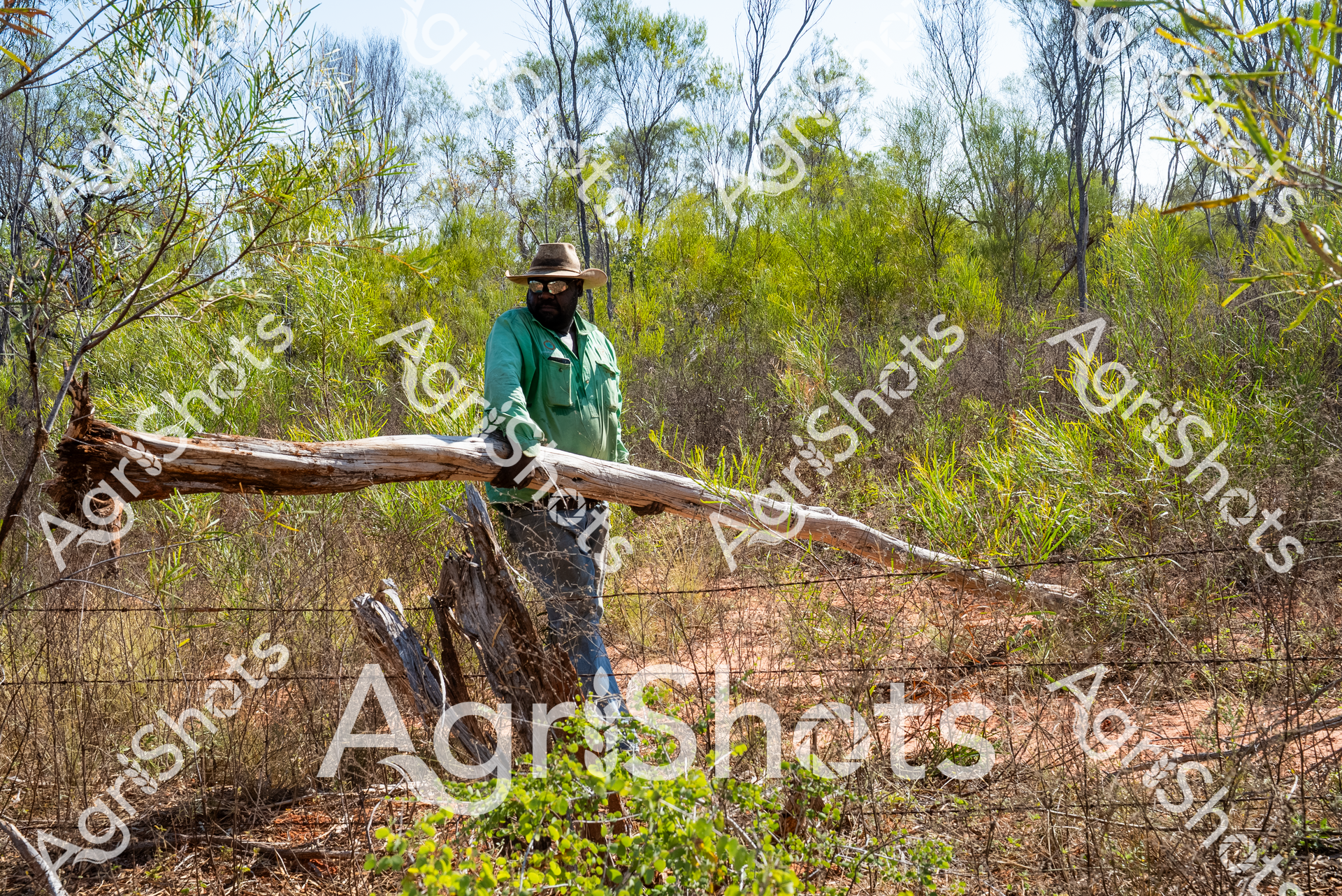
A man wearing a wide-brimmed hat and green work shirt stands amid scrubby bushland, holding a long fallen tree branch near a barbed wire fence. The scene appears to be in the Kimberley region of Western Australia during springtime, with sparse vegetation and dry ground typical of a pastoral station landscape. The worker seems to be engaged in rural maintenance tasks, likely clearing or repairing fencing in this rugged terrain.
 Image
Image
Rural fencing under the wide-open skies of Northern Territory's Adelaide River region captures the resilience of agricultural work. A worker in a vibrant blue long-sleeved shirt stands with her back to the camera, wearing a protective hat and gripping a heavy mallet to drive fence posts into the dry, golden grasslands. Sparse eucalyptus trees dot the landscape, casting minimal shade across the sun-baked terrain during the mild autumn season. The barbed wire fence stretches methodically across the rugged paddock, a testament to the critical infrastructure that defines rural property boundaries and livestock management. Her posture reveals concentration and strength, embodying the #WomenInAg movement and the collaborative spirit of Australian agricultural communities. The scene pulses with the quiet determination of those who maintain and preserve the working landscapes of the Northern Territory.
 Image
Image
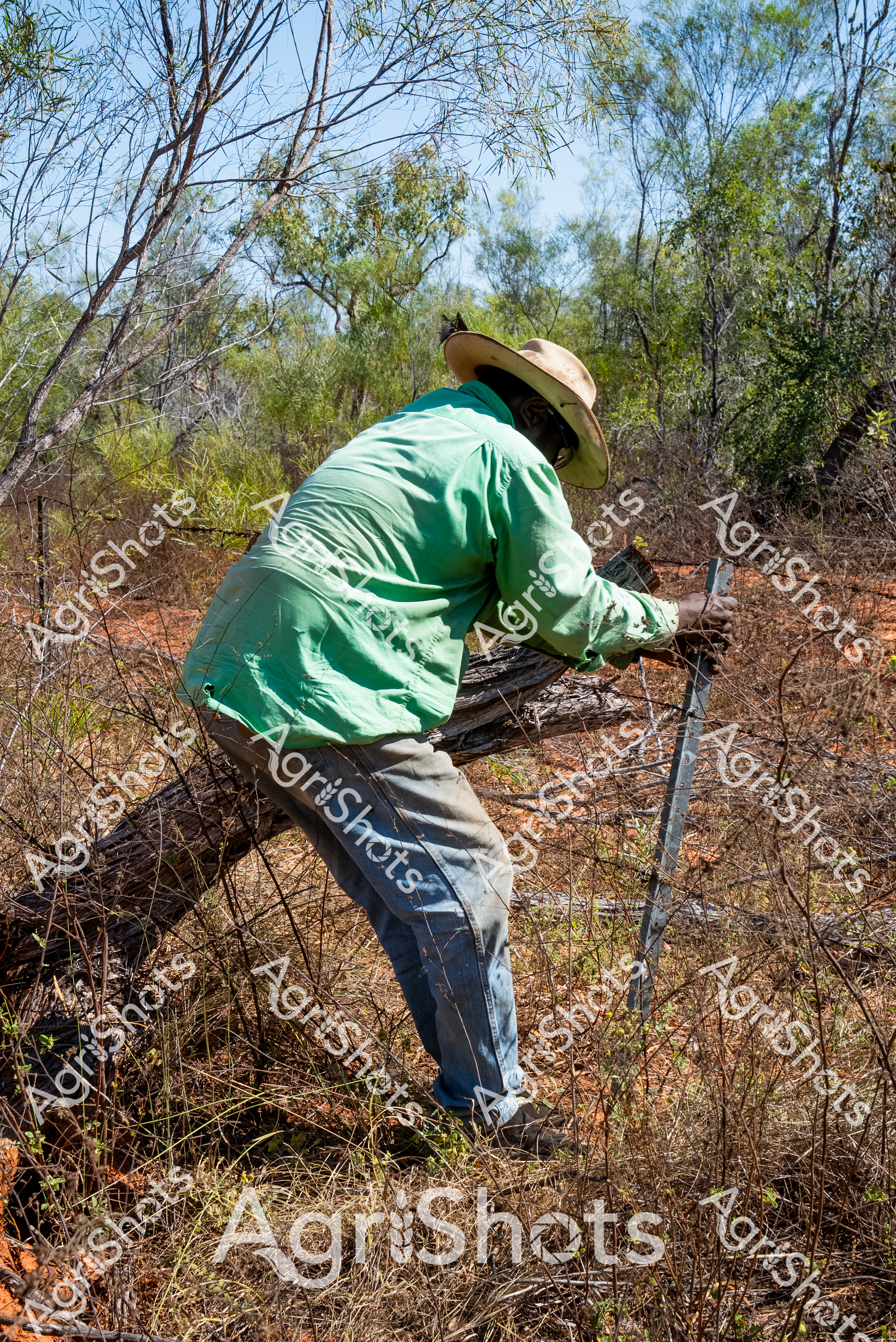
A man wearing a green shirt and wide-brimmed hat works on repairing a wire fence in the rugged, bush landscape of Western Australia's Kimberley Region. The dry, rocky terrain and sparse vegetation typical of a rural station setting surrounds him as he carefully tends to the boundary line.
 Image
Image
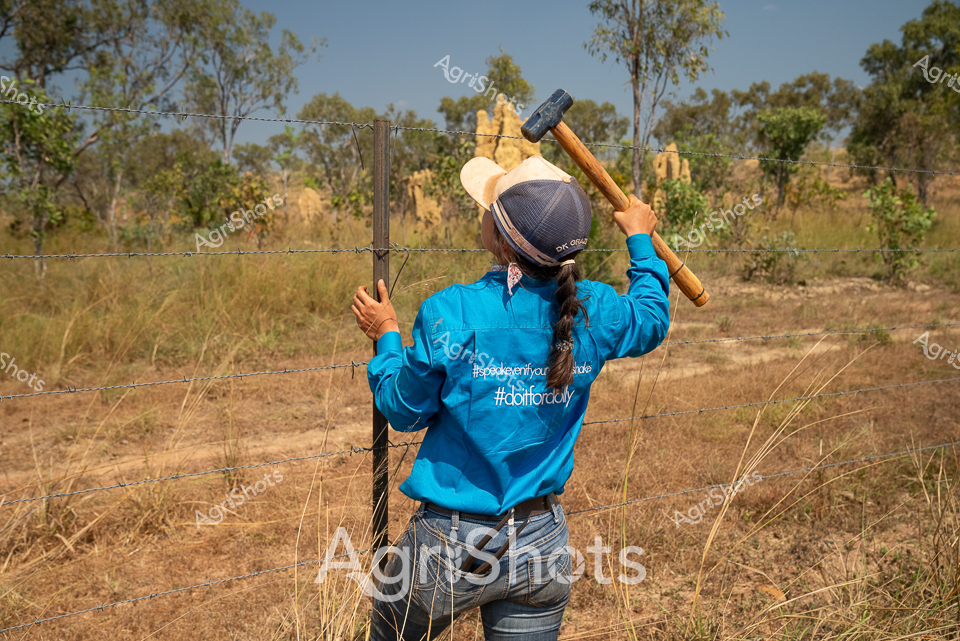
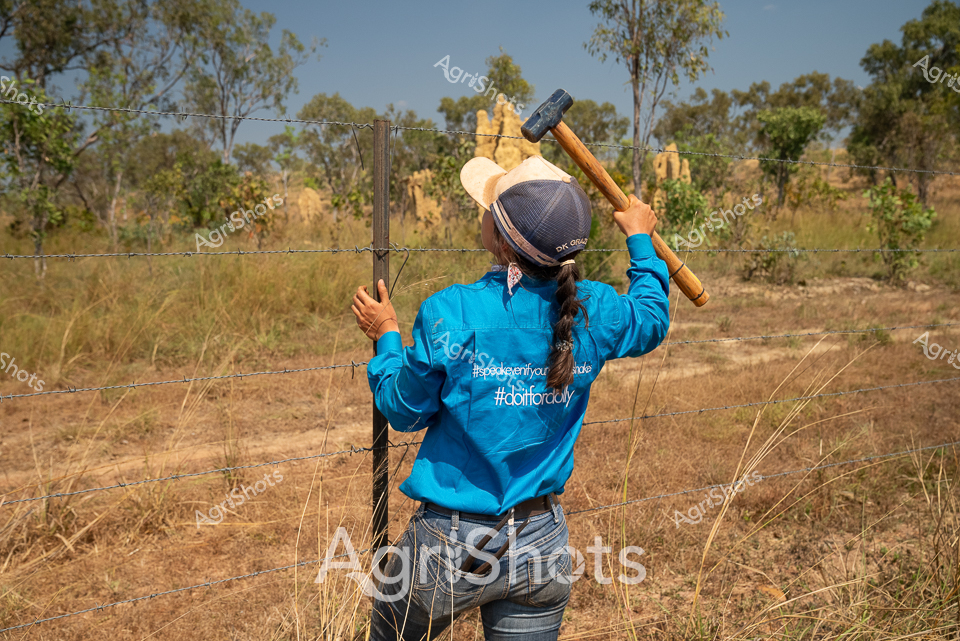
Rural fence maintenance under the golden autumn light of Australia's Northern Territory. A farm worker in a vibrant blue long-sleeved work shirt and denim jeans carefully repairs a barbed wire boundary fence, gripping a fence post while holding a heavy mallet. The backdrop reveals the classic Adelaide River region landscape - sparse eucalyptus trees, dry golden grasses, and sun-baked earth stretching toward a cloudless sky. Wearing a protective cap and work gloves, the worker appears focused and methodical, embodying the essential skills of rural infrastructure maintenance. The fence lines mark critical boundaries for cattle management, likely near export yards housing Brahman cattle - a breed renowned for its heat tolerance and importance to Australia's live export industry. This image captures the quiet determination of agricultural workers who maintain the intricate networks that support Australia's robust cattle production ecosystem.
 Image
Image
Fencing the dusty savanna of Australia's Northern Territory, a dedicated agricultural worker reinforces boundary lines under the golden afternoon light of autumn. Dressed in a vibrant blue long-sleeved work shirt and a protective cap, the individual carefully stretches barbed wire between sturdy metal fence posts, surrounded by sparse eucalyptus trees and dry grasslands. A weathered hammer rests across their shoulder, ready to secure the wire, while their back is turned to reveal a hashtag #doitfordolly printed on their shirt - suggesting a deeper community narrative or memorial purpose behind this rural task. The landscape speaks of resilience: sun-bleached grasses, scattered woodland, and the essential infrastructure of agricultural boundaries that define pastoral life in remote Australian regions. Her careful, methodical approach to mending the fence represents the quiet determination of women in agriculture, maintaining critical infrastructure under challenging environmental conditions. The scene captures the essence of rural work - solitary, precise, and fundamental to sustaining livestock and land management in one of Australia's most demanding agricultural landscapes.
 Image
Image
Rural Fence Maintenance in the Wimmera A skilled rural worker adjusts barbed wire along a rugged fence line in the dry golden grasslands of Victoria's Wimmera region. Dressed in a vibrant blue work shirt and a khaki cap, the worker carefully stretches and tensions the wire, ensuring the boundary's integrity against the backdrop of sparse eucalyptus trees and sun-bleached paddocks. The landscape speaks of a winter season's harsh agricultural terrain - dusty earth, weathered fence posts, and scattered vegetation highlighting the challenging conditions of Australian rural life. Intricate details reveal professional agricultural work: precision hand movements, protective layered clothing, and a focused demeanor that speaks to generations of farming expertise. The scene captures the essential maintenance work that underpins rural infrastructure, where every fence line represents a critical boundary for livestock management and property protection. Soft natural light casts subtle shadows, emphasizing the textural qualities of the landscape and the worker's careful, deliberate actions.
 Image
Image
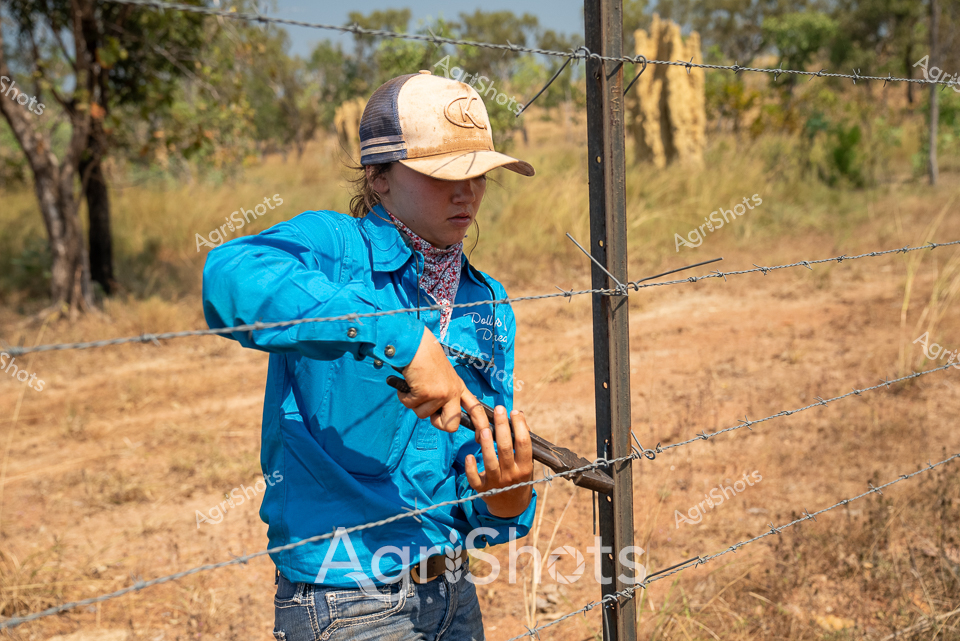
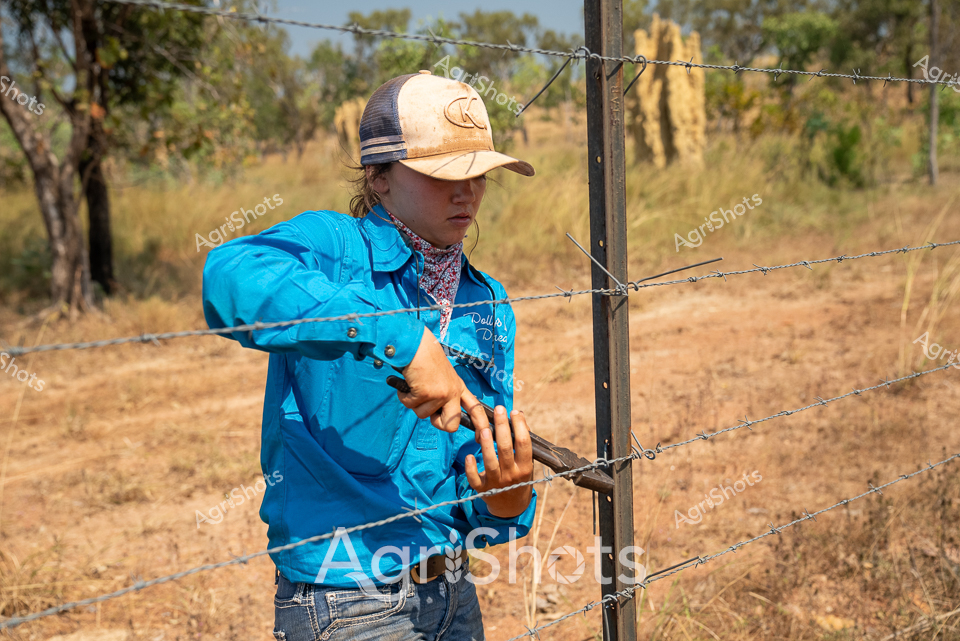
Rural fencing expertise unfolds against a sun-drenched Northern Territory landscape. A skilled agricultural worker in a vibrant turquoise work shirt and patterned bandana concentrates intently while repairing a barbed wire fence, her hands deftly manipulating the wire with practiced precision. Wearing a classic rural baseball cap and standing amid dry grasslands and scattered eucalyptus trees, she embodies the resilience of women in Australian agriculture. The golden-brown earth and weathered fence posts tell a story of challenging pastoral conditions, while her purposeful stance suggests the ongoing maintenance critical to rural infrastructure. Her attire - functional blue workshirt, carefully fitted jeans, and protective headwear - speaks to both practical necessity and professional pride in agricultural work. The scene captures a powerful moment of quiet determination, representing the DoitforDolly campaign's spirit of rural community solidarity and women's crucial role in agricultural landscapes.